
Silky bindweed
Convolvulus holosericeus
Description
Silky bindweed (Convolvulus holosericeus) is a perennial herbaceous plant belonging to the Convolvulaceae family. Unlike common invasive bindweed varieties, this specific species is valued for its horticultural potential and its ability to thrive in harsh, rocky environments where few other crops can survive.
The plant originates from the arid regions of the Mediterranean and Western Asia. Its natural habitat includes steep rocky hillsides and limestone outcrops, which has influenced its physiological development, favoring deep rooting and water-retention mechanisms within its silver-hairy foliage.
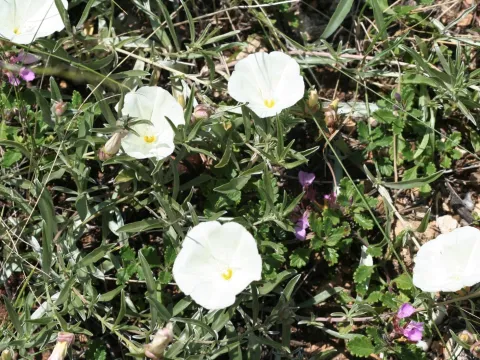
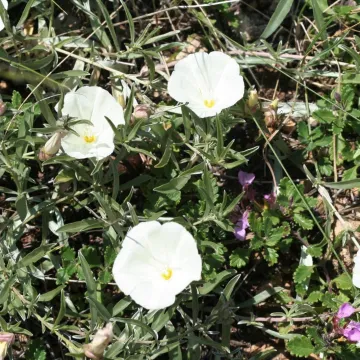
Botanically, it is defined by its compact habit and characteristic silky, tomentose leaves that serve to reflect intense sunlight and reduce transpiration. The flowers typically appear in late spring and summer, showcasing a delicate white to creamy aesthetic that complements its greyish-green foliage.
Cultivation requirements are specific: the crop necessitates excellent drainage and high sun exposure. Soil should be low in fertility, as rich organic matter often forces rapid, weak growth. Irrigation should be minimal, performed only during prolonged droughts to prevent root rot, which remains the primary threat to stand longevity.
Economically, this species is utilized in xeriscaping and soil erosion control projects due to its root structure and ground-covering ability. Agricultural management must focus on preventative measures against potential issues:
- Root rot (Phytophthora spp.) caused by stagnant moisture.
- Spider mites in extremely hot and dry conditions.
- Powdery mildew in areas with stagnant airflow.
Photo gallery