Woolly bindweed
Convolvulus lanuginosus
Description
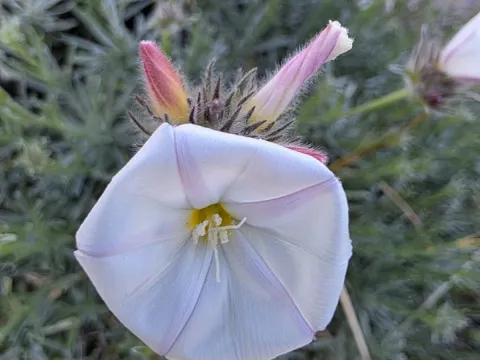
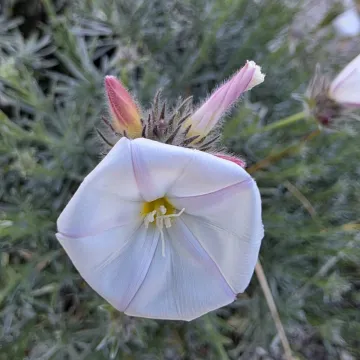
Woolly bindweed (Convolvulus lanuginosus) is a resilient perennial herb that belongs to the Convolvulaceae family. The plant is distinct for its silvery-grey, hair-like pubescence, which covers the entire foliage, providing a unique texture and acting as a protective barrier against extreme heat and dehydration.
The native distribution of this species is primarily concentrated in the Mediterranean basin and parts of Southeastern Europe. It typically thrives in challenging environments, such as arid, rocky slopes and calcareous outcrops, which have shaped its biological preference for nutrient-poor and well-aerated substrates.
Botanically, the plant is characterized by low-growing or trailing stems and narrow, dense leaves. During its blooming season, it produces elegant funnel-shaped flowers that are emblematic of the Convolvulus genus, adding significant aesthetic value to its natural habitat or garden environment.
Agrotechnical requirements for this crop focus primarily on drainage. It demands full sun exposure and performs poorly in heavy, water-logged soils. In professional landscape management, it is treated as a low-maintenance perennial that requires minimal irrigation once established and almost no supplemental fertilization.
- Extreme tolerance to heat and drought conditions.
- Strict preference for well-draining, calcareous soils.
- Optimal growth in full sun exposure.
- Ideal for rock gardens and xeriscaping.
The primary use of woolly bindweed is in ornamental horticulture, particularly for covering slopes or filling gaps in rock gardens. While generally robust, the plant can be susceptible to root rot if drainage is insufficient, and aphids may occasionally appear during prolonged periods of high humidity or poor air circulation.
Photo gallery