Lined bindweed
Convolvulus lineatus
Description
Lined bindweed (Convolvulus lineatus) is a perennial herbaceous plant belonging to the Convolvulaceae family. This species is highly specialized for arid environments, exhibiting remarkable adaptations to survive in nutrient-poor and moisture-deficient soils, which characterizes it as a classic xerophyte.
The natural range of Convolvulus lineatus spans across Mediterranean landscapes, the Caucasus, and Central Asia. It thrives in open, sunny habitats including dry steppes, rocky slopes, and sandy semi-deserts. Its ability to colonize degraded lands makes it an important species for ecological balance in challenging climates.
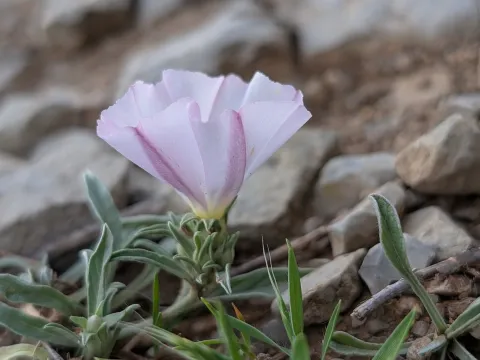
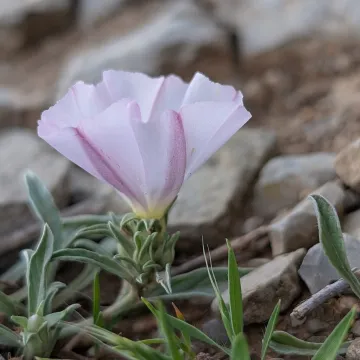
Botanically, the plant is distinguished by its silvery, pubescent leaves which serve as a protective layer against intense solar radiation and excessive water loss. The flowers are funnel-shaped, typically pale pink or white, and appear during the peak of the summer season. The plant relies on an extensive root system to anchor itself firmly into unstable ground.
Cultivation of lined bindweed requires careful attention to drainage; it is intolerant of waterlogging, which often leads to root fungal infections. The ideal soil profile for this plant consists of sandy or rocky substrate with excellent aeration. Fertilizer application is rarely necessary, as the plant is adapted to survival in soils with minimal organic matter content.
From an agricultural standpoint, the plant is primarily used for land stabilization and erosion control on vulnerable slopes. It also serves as a vital forage resource for pollinators in areas where other floral sources may be scarce due to drought. Regarding health, while generally robust, the plant can be susceptible to aphids or leaf-spotting fungi if environmental humidity remains high for extended periods.
- High tolerance to drought and thermal stress.
- Optimal growth in well-drained, sandy soils.
- Valuable for soil stabilization on arid slopes.
- Significant role in supporting pollinators in dryland ecosystems.
Photo gallery