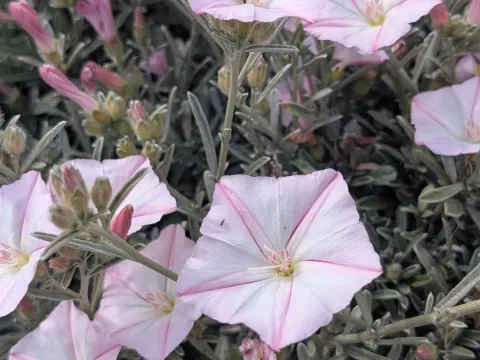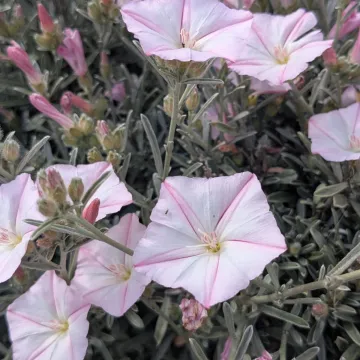

Olive-leaved bindweed
Convolvulus oleifolius
Description
The olive-leaved bindweed (Convolvulus oleifolius) is a perennial herbaceous plant or small subshrub belonging to the Convolvulaceae family. Unlike many of its weedy relatives, this species is noted for its aesthetic appeal, specifically its silver-toned, narrow foliage that offers a refined look in various environmental settings.
The plant is native to the Mediterranean region, naturally occurring in areas such as Southern Europe and North Africa. It is typically found in rocky, arid, and coastal habitats. This evolutionary history in challenging, nutrient-poor, and dry environments has shaped its high tolerance to heat and its efficient water-management system.
Botanically, Convolvulus oleifolius is distinguished by its linear-lanceolate leaves, which are covered in fine hairs that minimize transpiration. The plant produces delicate funnel-shaped flowers, typically in shades of pink or white, which bloom during the warmer months, providing a consistent display of color when provided with sufficient sunlight.
Cultivation of this species requires strict adherence to its natural habitat preferences. It thrives in well-draining, gritty, or sandy soils and requires full sun exposure to flourish. Improper drainage is the primary risk factor for the plant, as excess moisture in the soil can quickly lead to root rot. Regular pruning after the blooming cycle helps maintain its compact and tidy shape.
The main agricultural and horticultural interest in this plant lies in its use for xeriscaping—landscaping that requires little to no irrigation. It is increasingly utilized in rock gardens and sustainable urban planting projects. While it is generally robust, it is essential to monitor for pests such as aphids during periods of high humidity or poor ventilation.
Photo gallery