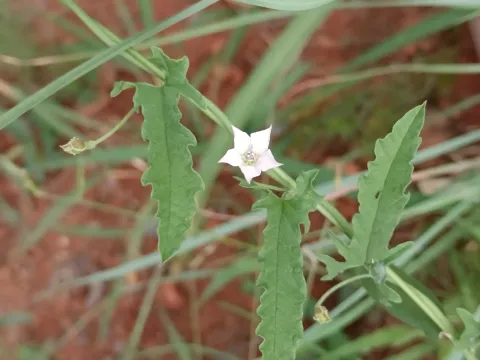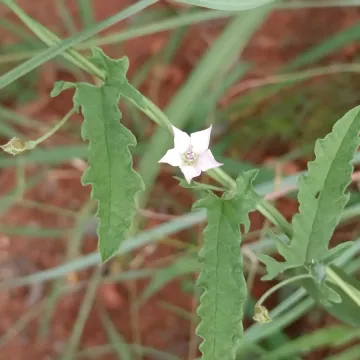

Arrowleaf bindweed
Convolvulus sagittatus
Description
Arrowleaf bindweed (Convolvulus sagittatus) is a perennial herbaceous plant belonging to the Convolvulaceae family. Known for its persistent growth habit, it represents a significant species in the study of agricultural weed ecology and botanical classification.
Native primarily to African regions, this plant has adapted to various environmental conditions globally. In agricultural landscapes, it is often classified as an invasive or troublesome weed that competes with crops for water, sunlight, and soil nutrients, particularly in undisturbed or minimally managed land.
The botanical structure of the plant features distinct sagittate (arrow-shaped) leaves and slender, twining stems. These stems exhibit significant elongation as they climb surrounding structures or crops for support. Its root system is notably robust, allowing the plant to persist in the soil and regenerate effectively after disturbance.
Regarding cultivation requirements, Convolvulus sagittatus thrives in sunny environments with well-drained soil. Effective management in an agronomic setting requires a comprehensive strategy, often combining mechanical control, such as deep tillage to expose roots, and the targeted application of herbicides to prevent further spread into production fields.
While the plant has limited positive economic use, its role as a competitive weed is well-documented. Common pests and diseases that affect the species include various fungal pathogens such as rusts and powdery mildew, as well as several insect species that feed on the foliage. Monitoring these threats is essential to prevent their spread to adjacent cultivated crops.
Photo gallery