Scammony
Convolvulus scammonia
Description
Scammony (Convolvulus scammonia) is a perennial herbaceous plant belonging to the Convolvulaceae family. It is a distinct species noted for its vigorous climbing habit and its massive, tuberous roots that contain significant amounts of active resinous substances, which have been historically valued for their pharmacological properties.
The native range of this plant extends throughout the Mediterranean region, including areas in Turkey, the Levant, and parts of the Greek islands. It is typically found in arid or semi-arid environments, favoring rocky slopes and scrublands where its deep root system allows it to withstand long periods of water scarcity.
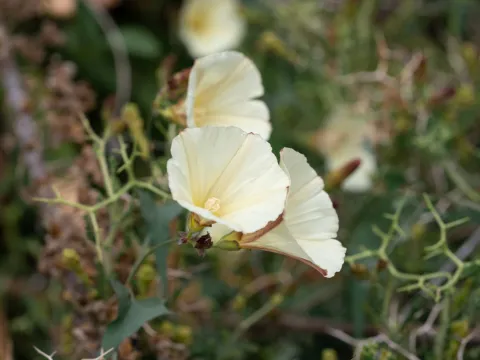
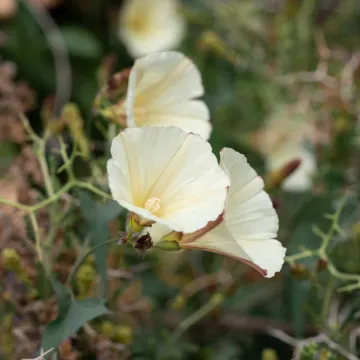
Botanically, the plant is characterized by its twining stems, sagittate leaves, and large, attractive trumpet-shaped flowers, which can vary from white to pale pink. The most essential part of the plant for commercial purposes is the root, which can grow to a considerable size and contains the concentrated milky latex that dries to form the commercial resin known as scammony.
Cultivation of scammony requires careful attention to soil conditions, specifically requiring well-drained, sandy or gravelly soil to prevent root rot. It thrives in warm, temperate climates with high solar exposure. In an agricultural setting, maintaining the proper soil structure and ensuring low humidity during the harvest period are critical for obtaining high-quality resin.
The primary economic use of scammony is the production of purgative resin extracted from the roots. While modern synthesis has reduced reliance on natural sources for some medicines, the extract remains significant in specific pharmacological applications. Farmers and herbalists must manage the plant with care, as the raw latex is known to cause skin irritation and systemic effects if handled improperly.
- Highly resilient to arid climate conditions.
- Requires well-aerated soil for optimal root development.
- Propagation is typically achieved through seeds or root divisions.
- Relatively low pressure from typical agricultural pests.
Photo gallery