Hairy Corchorus
Corchorus hirsutus
Description
Hairy Corchorus (Corchorus hirsutus) is a perennial shrub belonging to the Malvaceae family. Unlike its annual relatives commonly used for commercial jute production, this species is noted for its woody growth habit and its remarkable ability to thrive in harsh, arid environmental conditions where other plants struggle to survive.
The plant is native to the tropical regions of Africa, Madagascar, and parts of Australia. Its range of cultivation is largely concentrated in tropical and subtropical areas characterized by high temperatures and periodic droughts. It acts as an important ecological stabilizer in these regions, preventing soil erosion due to its deep and resilient root system.
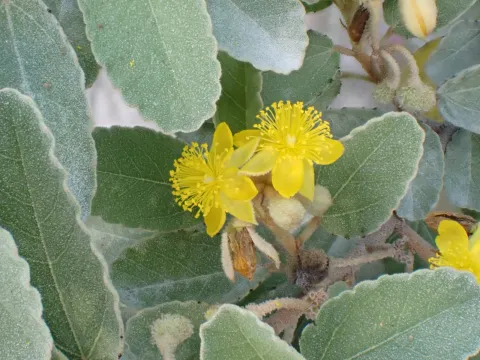
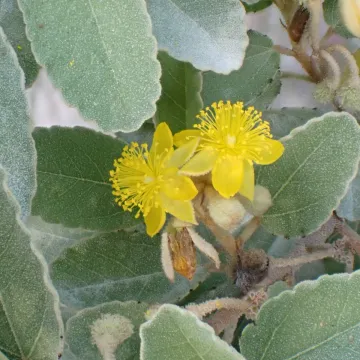
Botanically, the plant is distinguished by the dense, hairy pubescence covering its stems and leaves, which serves as a physiological adaptation to reduce transpiration. The plant grows as a hardy shrub reaching heights of 1 to 2 meters. It produces bright yellow flowers and elongated, dehiscent capsules that protect the seeds until maturity, facilitating dispersal in native environments.
In terms of agronomy, Hairy Corchorus requires full sun exposure and well-drained, sandy or gravelly soils. It is highly drought-tolerant once established and does not require intensive irrigation or fertilization. Cultivation practices should focus on maintaining adequate space between individual shrubs to ensure sufficient air circulation and to minimize the risk of localized humidity buildup.
The primary economic application of this crop is the extraction of strong bast fibers from the stems, which are suitable for cordage, matting, and rustic textile production. Beyond its industrial use, the plant is sometimes utilized in local agroforestry systems for land rehabilitation and as a source of biomass in regions with limited agricultural inputs.
The plant is susceptible to several biotic stressors that farmers must monitor:
- Spider mites that flourish in hot and dry climates.
- Various leaf-chewing larvae that can significantly reduce biomass.
- Fungal infections triggered by poor soil drainage.
- Root-knot nematodes in specific soil types.
Photo gallery