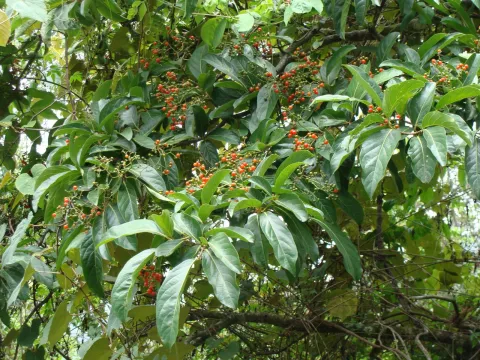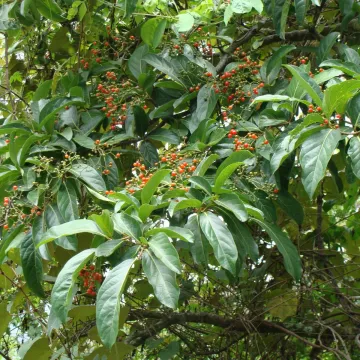
Cordia collococca
Cordia collococca
Description
Cordia collococca is a distinct species within the Boraginaceae family, native to the tropical regions of Central and South America and the Caribbean islands. This plant is a medium-sized evergreen tree that plays a significant role in its local ecosystem, often utilized for both its edible fruits and its high-quality timber. It is characterized by its adaptability to various tropical climates and environments.
Botanically, the tree typically features simple, leathery leaves and produces small, fragrant white flowers arranged in terminal clusters. The fruit is a small, globose drupe that turns bright red when fully ripe, containing a mucilaginous, sweet-tasting pulp. The growth habit of the tree is generally spreading, making it a prominent feature in both natural forest habitats and cultivated agroforestry systems.
Regarding climate and soil requirements, Cordia collococca thrives in tropical conditions characterized by high humidity and consistent temperatures. It performs best in well-drained, fertile soils, including sandy loams and calcareous soils common in its native range. While it exhibits some tolerance to periods of low rainfall, adequate irrigation is essential during the early stages of establishment and for optimizing fruit yield.
Agricultural management requires regular pruning to maintain a healthy crown structure and prevent the development of fungal pathogens, which can thrive in dense, humid foliage. Propagation is primarily achieved through seeds, which should be planted in a warm, moist nursery environment. Effective weed control and periodic applications of organic matter around the base of the tree are recommended practices to ensure vigorous growth and sustained plant health.
The economic utility of Cordia collococca is twofold: it provides valuable non-timber forest products in the form of edible fruits, which are consumed locally, and high-quality wood used for fine carpentry and cabinet making. Beyond its direct use, the tree is frequently integrated into agroforestry models to provide shade for other crops and to stabilize the soil, thereby preventing erosion in tropical agricultural landscapes.
- Family: Boraginaceae
- Origin: Tropical America, Caribbean
- Key Features: Red drupe fruits, evergreen
- Primary Uses: Edible fruits, wood production
- Agricultural Role: Shade tree, erosion control
Photo gallery