Yellow Cordia
Cordia lutea
Description
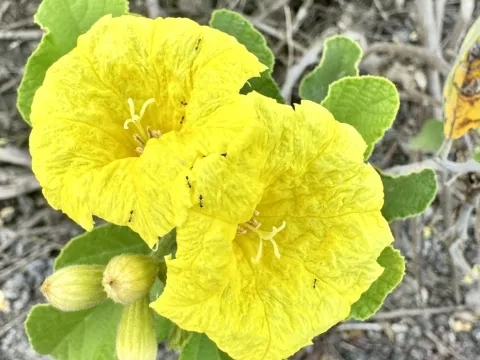
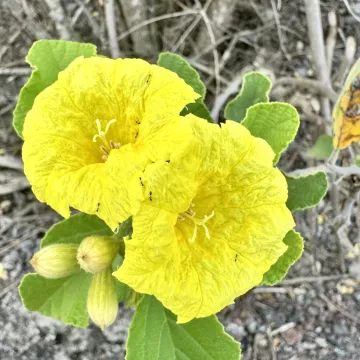
Yellow Cordia (Cordia lutea) is a species of flowering shrub or small tree belonging to the Boraginaceae family. It is widely recognized for its vibrant yellow, funnel-shaped blossoms and its impressive ability to thrive in harsh, arid environmental conditions, making it a robust ornamental and utilitarian plant.
Native to the tropical regions of the Americas, particularly in countries like Peru and Ecuador, Yellow Cordia is well-adapted to coastal and semi-desert climates. Its range of cultivation has expanded globally in regions that mirror these warm, dry conditions, where the plant is valued for its hardiness against drought.
Botanically, the plant is characterized by its stiff, ovate leaves that feature a textured surface, designed to minimize transpirational water loss. The plant typically grows as a multi-stemmed shrub reaching several meters in height. The fruits are small, drupe-like structures, which are typical for the Cordia genus and play a role in seed dispersal by local fauna.
Agricultural success with Cordia lutea depends on soil drainage and high light intensity. It is not suitable for waterlogged areas, as the roots are highly susceptible to rot. In cultivation, pruning is an essential practice to maintain plant structure and ensure air circulation, which helps prevent pest infestations and foliage diseases.
Host-plant utility includes its use in landscape design, soil stabilization in semi-arid zones, and as a natural source of compounds for medicinal applications. As a drought-tolerant species, it requires minimal inputs, making it an excellent choice for sustainable agroforestry projects in tropical climates. While generally resistant, monitoring for scale insects or whiteflies is recommended.
- Hardiness Zone: Tropical and Subtropical.
- Sun exposure: Full sun is critical.
- Soil requirement: Well-draining, sandy or loamy soils.
- Maintenance: Low to moderate drought resistance.
Photo gallery