Little-leaf cordia
Cordia parvifolia
Description
Little-leaf cordia (Cordia parvifolia) is a perennial shrub belonging to the family Boraginaceae. It is a highly resilient plant native to arid environments, known for its ability to thrive in extreme heat and low-moisture conditions that would be fatal to most agricultural crops.
The origin of this species is traced to the Chihuahuan and Sonoran deserts of Northern Mexico and the Southwestern United States. It is a signature plant in these regions, adapted to survive in areas characterized by intense solar radiation and sporadic rainfall patterns.
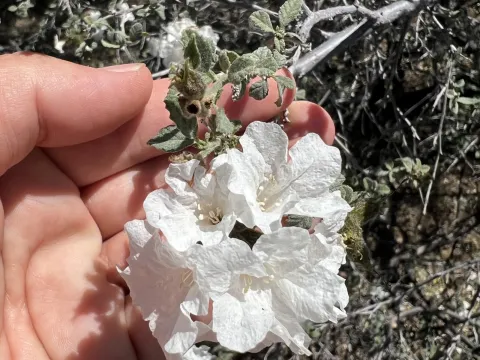
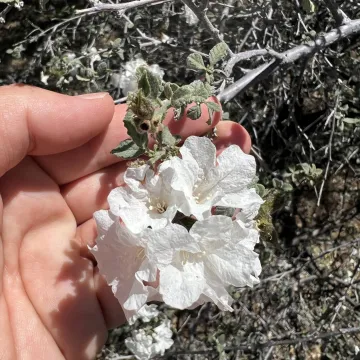
Botanically, Cordia parvifolia is defined by its compact habit, spiny branches, and small, tough leaves designed to minimize transpiration. The plant produces distinctive white, funnel-shaped flowers that provide a stark aesthetic contrast to the rugged, greyish bark, blooming primarily during warmer months.
Regarding cultural requirements, the plant demands excellent soil drainage. It thrives in gravelly or sandy substrates and is highly intolerant of waterlogged soils. In professional landscape management, irrigation should be kept to a bare minimum once the plant is established, ensuring that the root system remains aerated and dry.
- Requires full sun exposure for optimal flowering.
- Highly tolerant of high temperatures and alkalinity.
- Minimal fertilization needed; native soils are typically sufficient.
- Resistant to most common desert pests and foliage diseases.
In terms of economic use, the species is highly valued for xeriscaping and environmental restoration projects. It serves as an essential nectar source for pollinators in desert ecosystems and acts as an effective stabilizer for sandy soils, preventing wind erosion in arid landscapes.
Photo gallery