Leavenworth's tickseed
Coreopsis leavenworthii
Description
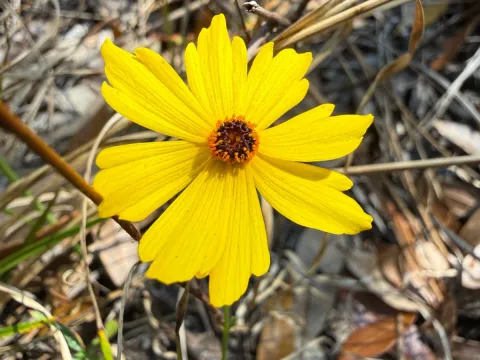
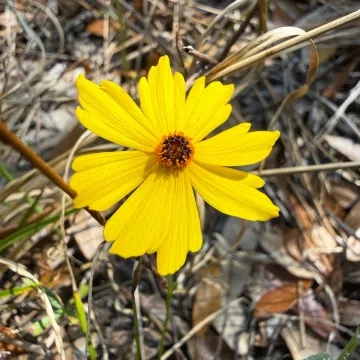
Leavenworth's tickseed (Coreopsis leavenworthii) is a perennial flowering plant belonging to the Asteraceae family. This species is highly valued for its striking yellow daisy-like blooms that provide a splash of color to landscapes during the active growing season.
The plant is native to the southeastern United States, with a primary concentration in Florida. It typically thrives in moist natural environments such as marshes, wet prairies, ditches, and the edges of ponds, demonstrating a natural preference for sites with ample soil moisture.
Botanically, this species typically reaches a height of 2 to 3 feet. It features slender, lance-shaped foliage and terminal flower heads with bright yellow ray florets surrounding a prominent, brownish-purple central disk, which is a distinctive trait of the species.
For successful cultivation, Coreopsis leavenworthii requires full sun exposure and consistently moist soil conditions. While it exhibits some tolerance for varying soil types, it performs best when planted in substrates that retain moisture, making it an excellent choice for rain gardens or low-lying landscape areas.
In terms of practical use, the plant is primarily employed in native plant landscaping and ecological restoration. It serves as an essential nectar source for a variety of pollinators, including native bees and butterflies, while simultaneously acting as a low-maintenance perennial for perennial borders and wildflower meadows.
- Hardiness: suitable for warm, humid temperate zones.
- Maintenance: requires pruning of spent flowers to encourage repeat blooming.
- Common pests: aphids or powdery mildew in poorly ventilated, overly humid conditions.
- Propagation: easily grown from seeds or by division of established root clumps.
Photo gallery