Prairie coreopsis
Coreopsis palmata
Description
Prairie coreopsis (lat. Coreopsis palmata) is a perennial flowering plant belonging to the Asteraceae family. Known for its distinct foliage and bright yellow blooms, it is a hardy species widely recognized for its ability to thrive in grassland ecosystems.
Native to the prairies of North America, this plant has adapted to open, sunny environments. Its natural range reflects its resilience, as it is capable of surviving in various soil types and tolerating the fluctuating weather patterns characteristic of the temperate climate zones.
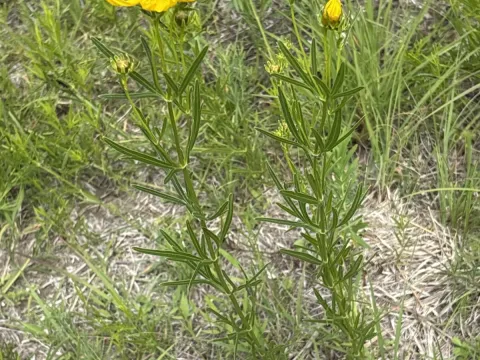
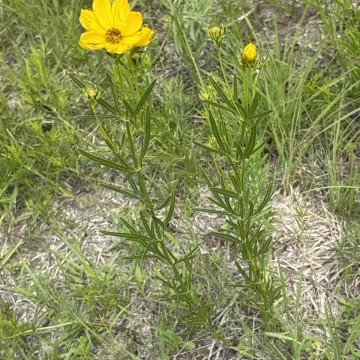
Botanically, it is characterized by its palmately divided leaves and daisy-like flower heads. It spreads via rhizomes, which allows it to form dense colonies over time. This growth habit makes it an excellent choice for stabilizing soil in meadows or naturalized areas.
Cultivation requires full sun exposure and well-drained soil. While it is adaptable to poor soils, it performs best when provided with adequate space to expand and enough sunlight to prevent legginess. It is highly valued in agriculture for ecological restoration projects due to its minimal input requirements.
In terms of maintenance, prairie coreopsis is relatively low-input. It is generally resistant to common garden pests and diseases, though occasional monitoring for powdery mildew or leaf spots in overly humid climates is advised. It is an essential species for supporting local pollinator populations.
- Excellent drought tolerance once established
- High value for native pollinator habitats
- Strong rhizomatous root system for soil stability
- Low maintenance requirements for perennial beds
Photo gallery