Coriaria arborea
Coriaria arborea
Description
Coriaria arborea, commonly known as tutu, is a distinctive shrub belonging to the Coriariaceae family. While not a typical agricultural crop in the traditional sense, this species holds significant value in botanical research, land management, and environmental restoration due to its ecological plasticity and biological characteristics.
Native to New Zealand, this plant displays a wide geographical range, inhabiting diverse environments including forest fringes, riverbanks, and steep slopes. As a pioneer species, it excels in colonizing disturbed land, helping to stabilize soil structures and enrich the ecosystem, particularly through its association with nitrogen-fixing actinomycetes.
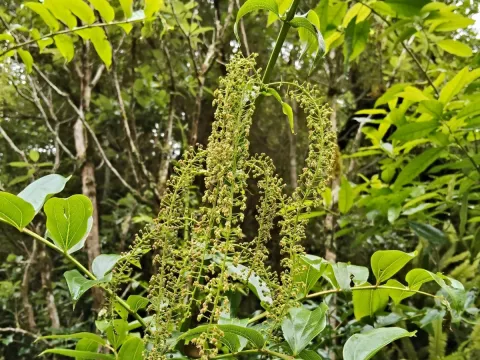
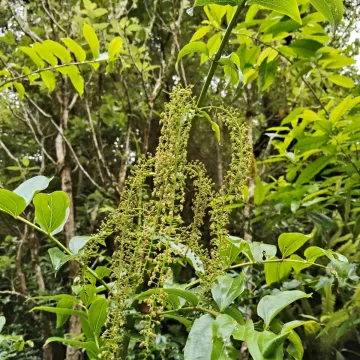
Botanically, Coriaria arborea is characterized by its distinctively angled, four-sided stems and opposite, pinnate leaves. The plant produces long, drooping racemes of small flowers, which develop into succulent, dark fruit-like structures. It is critical for managers to recognize its toxicity, as it contains tutin, a potent neurotoxin that poses a lethal threat to livestock if ingested.
Cultivation requirements favor well-drained, fertile soils with sufficient moisture availability. Although it is relatively hardy, it performs best in full sun or light shade. Agronomic management involves minimal intervention once established; however, initial site preparation and weed control are essential for seedling survival and early development in large-scale restoration projects.
The main agricultural and ecological applications revolve around erosion control, reforestation of steep terrain, and soil rehabilitation. Regarding health management, the plant is susceptible to certain fungal leaf pathogens, especially in high-humidity climates. Common pests include various sucking insects that target young foliage; therefore, integrated pest management (IPM) practices are recommended to maintain plant health.
Photo gallery