
Japanese Coriaria
Coriaria japonica
Description
Japanese Coriaria (Coriaria japonica) is a deciduous shrub belonging to the Coriariaceae family. Known for its elegant architecture and distinct foliage, it is primarily cultivated as an ornamental specimen in botanical gardens and private landscapes where its unique growth habit can be fully appreciated.
The plant originates from East Asia, specifically Japan. In its natural habitat, it thrives in cool, moist, and well-drained environments such as mountain slopes or forest edges. This native distribution indicates that the plant prefers temperate climates with sufficient protection from extreme drought or harsh, scorching sunlight.
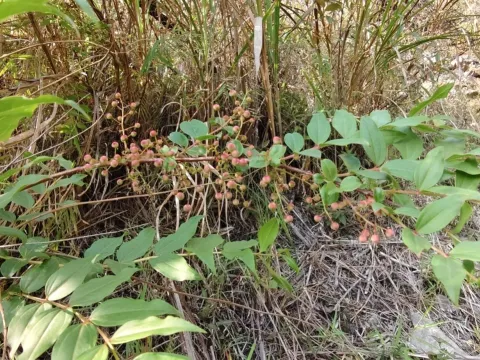
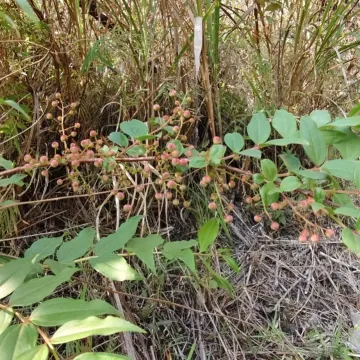
Botanically, it features opposite, simple leaves and distinct, arching stems. One of the most striking aspects of the plant is its reproductive stage, producing long, terminal racemes. The flowers eventually give way to small, glossy fruits. These fruits undergo a color transition, which adds significant visual interest to the shrub during the mid-to-late summer season.
Cultivation requires specific attention to soil composition. Ideally, the soil should be rich in organic matter and maintain a slightly acidic to neutral pH. Proper drainage is critical; while the plant enjoys moisture, waterlogging often leads to root health issues. In colder regions, providing a thick layer of mulch around the base is essential to protect the roots during winter.
Regarding its utility, the Japanese Coriaria serves strictly as an ornamental plant. It is critical to note that all parts of the plant are highly toxic if ingested due to the presence of coriamyrtin and other compounds. Care should be taken when pruning or handling the plant to avoid irritation. Common pests are generally minimal, but gardeners should monitor for fungal foliage diseases caused by prolonged humidity.
Photo gallery