Himalayan Coriaria
Coriaria nepalensis
Description
Himalayan Coriaria (Coriaria nepalensis) is a deciduous or semi-evergreen shrub belonging to the monotypic family Coriariaceae. It is characterized by long, arched branches that create an elegant, cascading habit, making it an attractive subject for specialized landscape projects in various climates.
Native to the Himalayan regions, including Nepal, Northern India, and parts of China, this species is naturally adapted to mountain slopes and forest margins. Its indigenous habitat consists of well-drained, often stony soils where it thrives in sunlight or light shade, demonstrating significant resilience to environmental stressors typical of high-altitude ecosystems.
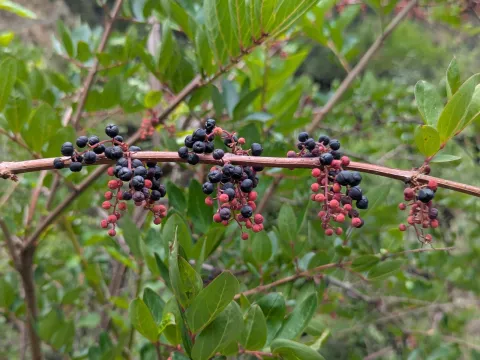
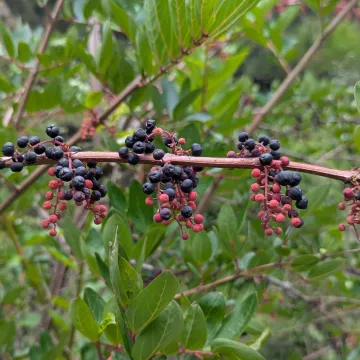
Botanically, the plant displays opposite leaves and small flowers arranged in racemes. The fruit consists of small nutlets surrounded by fleshy petals, resembling mulberries. It is crucial to note that the plant is toxic to humans and animals due to the presence of the glycoside coriamyrtin. Caution must be exercised during pruning or handling to ensure the safety of pets and children in garden areas.
Cultivation requirements involve providing well-drained, slightly acidic to neutral soil. The shrub prefers deep, fertile ground but is highly tolerant of rocky soils. It requires moderate watering during the establishment phase and protection from harsh winter winds. Propagation is typically achieved through seeds or stem cuttings during the early spring or late autumn.
The primary utility of Himalayan Coriaria lies in ornamental landscaping and soil conservation. Due to its ability to form a symbiotic relationship with nitrogen-fixing bacteria, it improves soil quality in nutrient-poor environments. Furthermore, its root system is effective at stabilizing loose slopes, making it a functional choice for reclamation projects in regions where winter temperatures remain mild.
- Excellent potential for erosion control on slopes.
- Symbiotic nitrogen-fixing capabilities for soil enrichment.
- Distinctive cascading form for aesthetic landscaping.
- Caution required regarding toxicity of all plant parts.
Photo gallery