Grey bugseed
Corispermum canescens
Description
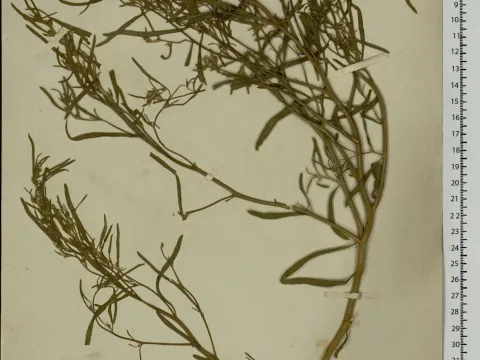
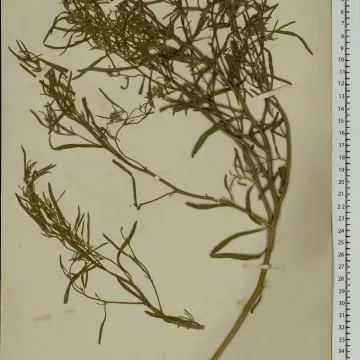
Grey bugseed (Corispermum canescens) is an annual herbaceous plant belonging to the Amaranthaceae family. As a specialized psammophyte, it has evolved to thrive on loose, sandy substrates, playing a critical role in stabilization of dunes and shifting sands in desert and steppe environments.
The native range of this species extends across the arid regions of Eurasia, encompassing Central Asia, parts of the Russian steppes, and Mongolia. It is well-adapted to high-temperature fluctuations and saline soils, where its ability to penetrate deep with a taproot system allows it to access subsoil moisture during the harsh summer seasons.
Morphologically, Corispermum canescens is defined by its highly branched stem structure covered in a distinct grayish pubescence, which serves as a protective layer against excessive transpiration. The leaves are narrow and linear, contributing to its drought-resistant profile. The plant completes its life cycle relatively quickly, setting seeds that are adapted for wind dispersal across open landscapes.
Agricultural cultivation of grey bugseed is primarily focused on environmental protection rather than intensive farming. It thrives in well-aerated sandy soils and requires minimal human intervention. Sowing should be timed to coincide with early spring moisture. Proper stand management involves avoiding overgrazing to ensure the plants reach the seed-setting stage, thereby guaranteeing the sustainability of the forage crop for future seasons.
The main economic applications of this plant include soil erosion control and low-intensity forage production. It provides essential nutrition for camels, goats, and sheep in regions where conventional crops cannot survive. Typical diseases include sporadic instances of root rot under waterlogged conditions, and primary pests include aphids which may target the succulent growth during the early stages of development.
Photo gallery