Corispermum hyssopifolium
Corispermum hyssopifolium
Description
Corispermum hyssopifolium, commonly known as hyssop-leaved bugseed, is an annual herbaceous plant belonging to the Amaranthaceae family. This species is highly valued in environmental science for its remarkable ability to thrive in harsh, sandy, and saline environments, making it a key candidate for land reclamation projects.
The plant originates from the arid regions of Eurasia and has a wide distribution in steppe and semi-desert zones. It is specifically adapted to unstable substrates, such as sand dunes, where it plays a critical role in stabilizing the soil and preventing desertification. Its presence is often a indicator of recovery in highly degraded ecosystems.
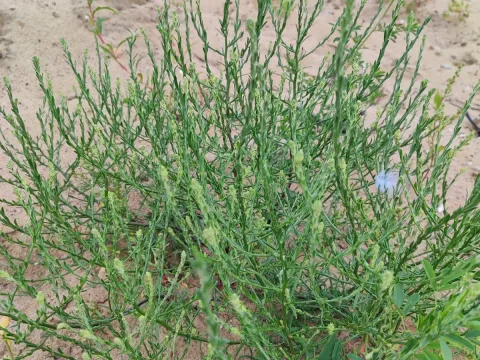
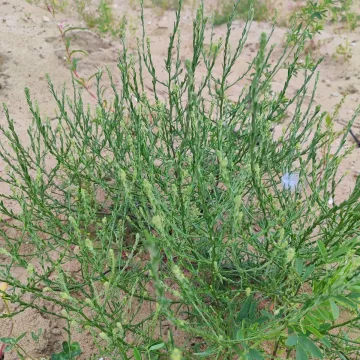
Botanically, this species typically reaches a height of 20 to 50 centimeters. It features slender, hyssop-like leaves and small, inconspicuous flowers clustered into spikes. The plant possesses a robust root system, which allows it to secure nutrients and limited moisture from deep soil layers during prolonged dry spells.
Regarding agrotechnical requirements, Corispermum hyssopifolium is exceptionally undemanding. It thrives in poor, sandy soils and does not require intensive tillage or synthetic fertilizers. The main focus for successful establishment is ensuring sufficient seed contact with the soil during the early spring, allowing it to complete its life cycle before the onset of extreme summer temperatures.
Key areas of agricultural and environmental utilization include:
- Stabilization of sandy soils to combat wind erosion and sand drifting.
- Provision of emergency forage for camels and sheep in semi-arid grazing lands.
- Phytoremediation and restoration of saline or degraded wasteland areas.
- Biodiversity enhancement in desert ecosystems to support local fauna.
The plant demonstrates significant natural resistance to most common crop pests and diseases. Its resilience is attributed to its specialized evolutionary adaptations to extreme habitats, which discourage common pathogens. Consequently, it requires virtually no chemical pesticides or fungicides, positioning it as an ideal low-input plant for sustainable land management.
Photo gallery