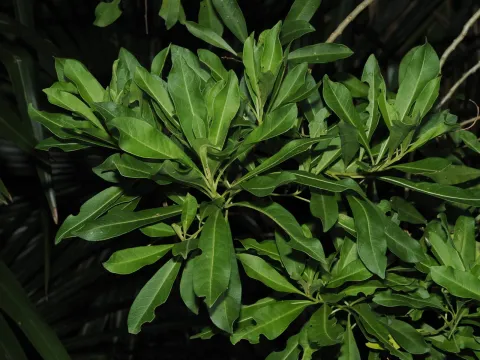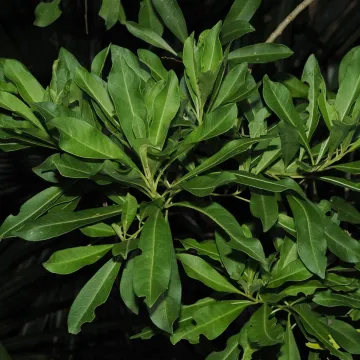
Corkwood tree
Duboisia myoporoides R. Br.
Description
The Corkwood tree (scientific name Duboisia myoporoides) is a perennial evergreen shrub or small tree belonging to the Solanaceae family. It is widely recognized in the pharmaceutical industry for its unique ability to biosynthesize high concentrations of tropane alkaloids, making it a critical crop for medicinal purposes in specific geographical regions.
The native habitat of this plant includes the eastern coastal regions of Australia and parts of New Caledonia. It thrives in warm, temperate to tropical climates, requiring consistent warmth throughout the year. The tree is not frost-tolerant, which limits its commercial cultivation to specific zones that provide a stable, frost-free environment throughout the growing season.
Botanically, the species is characterized by its glossy, lance-shaped leaves and clusters of small white or lilac flowers that bloom throughout the year. It possesses a moderate growth rate and can reach heights of up to 10 meters if left unpruned. However, in agriculture, frequent pruning is used to keep the canopy dense and maximize leaf yield for harvest.
Agronomic requirements center on well-draining, fertile soils with a pH ranging from slightly acidic to neutral. The plant needs consistent moisture, especially during the establishment phase, but it cannot tolerate waterlogged soils, which lead to root rot. High nitrogen fertilization is often required to sustain the rapid regrowth of foliage after harvesting cycles.
The main commercial value of the Corkwood tree lies in its leaves, which serve as the primary source for the extraction of hyoscine (scopolamine) and hyoscyamine. These active ingredients are fundamental in modern medicine for manufacturing anti-nausea medication, pupillary dilators for ophthalmology, and various treatments for neurological disorders.
Key challenges in maintaining healthy plantations include:
- aphid infestations, which can stunt the growth of young shoots;
- fungal leaf pathogens occurring during high-humidity seasons;
- root-knot nematodes in sandy soil conditions;
- vascular wilts caused by improper soil drainage management.
Photo gallery