Coronilla vaginalis
Coronilla vaginalis
Description
Coronilla vaginalis is a perennial herbaceous plant belonging to the Fabaceae family. As a leguminous crop, it plays a vital role in sustainable agriculture, primarily due to its ability to fix atmospheric nitrogen and improve soil fertility in nutrient-poor environments.
Originating from mountainous regions of Europe, the plant is well-adapted to limestone-rich soils and rocky habitats. Its natural distribution spans across various Central and Southern European terrains, where it thrives in well-drained, sunny locations with a temperate climate.
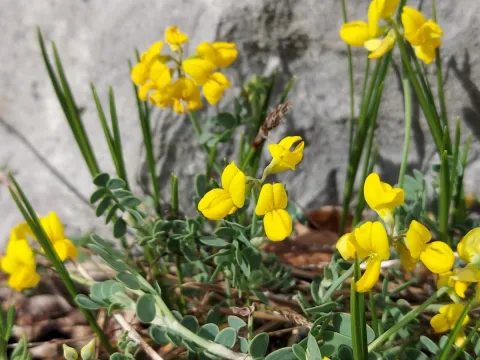
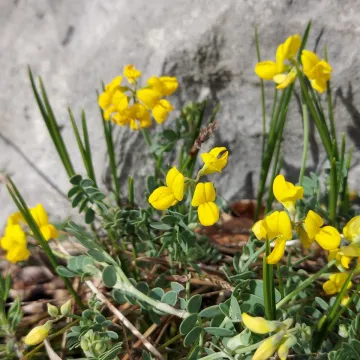
Botanically, this species is characterized by its distinctively sheathing stipules and heads of vibrant yellow flowers. The plant usually grows as a low-spreading subshrub, reaching modest heights. Its root system is exceptionally robust, allowing it to penetrate compacted layers and prevent soil erosion.
Regarding agrotechnical requirements, Coronilla vaginalis prefers alkaline to neutral, well-drained soils. It exhibits a high degree of drought tolerance once established, making it suitable for low-input farming systems. Regular fertilization is generally not required, as the plant actively contributes to the nitrogen cycle.
In agricultural practice, its primary uses include bio-engineering for slope stabilization, acting as an important honey-producing plant, and serving as a forage supplement in extensive grazing systems. Typical pests and diseases are minimal, usually restricted to occasional fungal infections in areas with poor drainage.
- Excellent soil binder.
- Fixes atmospheric nitrogen.
- Adapts to calcareous soils.
- Low water requirements.
Photo gallery