Strapwort
Corrigiola litoralis
Description
Strapwort (Corrigiola litoralis) is a small, herbaceous plant belonging to the Caryophyllaceae family. It is widely recognized in botanical circles for its preference for sandy, open habitats, such as riverbanks and disturbed areas. While it is not a cultivated agricultural crop, it is of interest in environmental management and integrated pest control strategies due to its role in colonizing depleted soils.
The origin of this species is primarily linked to the temperate and Mediterranean regions of Europe and Africa. Over time, it has spread to other parts of the world, including parts of the Americas. Its natural range is characterized by damp but sandy conditions where the plant can establish itself without significant competition from taller vegetation.
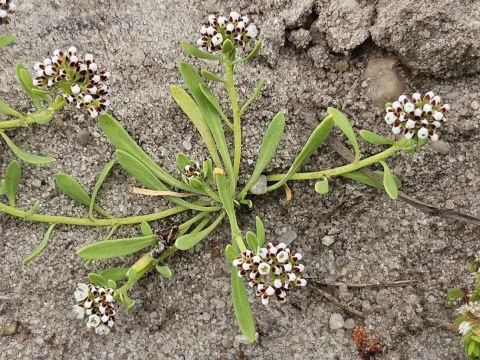
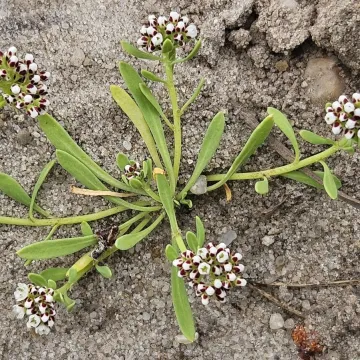
Morphologically, strapwort is easily identified by its prostrate, branching stems and small, fleshy, linear-lanceolate leaves that often feature a blue-green glaucous appearance. The plant produces dense clusters of tiny, white-margined flowers that are inconspicuous but essential for taxonomic identification. It usually completes its life cycle in a relatively short window of time depending on local temperatures.
Regarding soil and climate requirements, strapwort thrives in well-drained, nutrient-poor, and acidic sandy substrates. It is highly resistant to drought and can survive in areas where nitrogen levels are insufficient for traditional agricultural crops. From an agronomic perspective, it does not require cultivation and is often managed through basic mechanical weeding when present in non-target areas.
The economic use of this plant is minimal, primarily focusing on its role as a botanical interest and an indicator species for soil composition. Common threats to its survival or spread include:
- Competition from invasive aggressive weeds.
- Soil compaction causing root aeration issues.
- Specific fungal infections that thrive in waterlogged conditions.
- Herbivory by small soil-dwelling invertebrates.
Strapwort is not classified as a major agricultural threat, but its presence can sometimes be a signal to farmers that the soil composition lacks the organic matter required for more profitable, high-yield crop rotations. Its presence usually warrants a review of fertilization and crop protection strategies.
Photo gallery