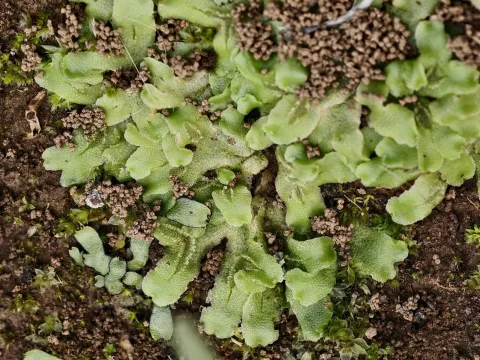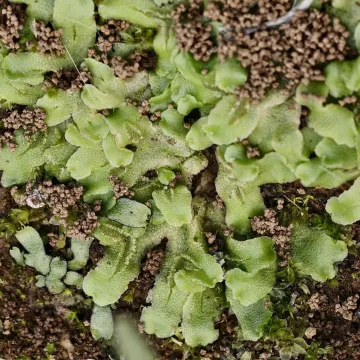
Corsinia coriandrina
Corsinia coriandrina
Description
Corsinia coriandrina is a unique species of liverwort belonging to the Corsiniaceae family. Unlike traditional crops, it is a non-agricultural bryophyte that serves as an interesting subject for botanical research and an indicator species for specific soil conditions.
The plant has a Mediterranean-type distribution, found in parts of Europe, North Africa, and South America. It typically grows in moist, open, and disturbed habitats, such as ephemeral stream banks or damp areas where competition from more robust vegetation is minimal.
Botanically, Corsinia coriandrina is characterized by a flat, dichotomously branched thallus. A defining feature is its reproductive strategy: the sporangia are sunken into the tissue of the thallus, which provides essential protection from desiccation in hot and arid environments.
Regarding ecological requirements, this species thrives in soils that experience fluctuating moisture levels. It requires high humidity during its growth phase, often appearing after rainfall on clay or sandy substrates. Its presence in agricultural landscapes usually highlights localized soil drainage issues.
The species has no direct economic or agricultural use, as it is a wild bryophyte. It is not prone to crop pests or diseases, as it exists outside the framework of cultivated commercial plants, maintaining its existence through survival strategies adapted to extreme environmental changes.
- Family: Corsiniaceae
- Category: Thalloid liverwort
- Habitat: Moist exposed soils
- Key Trait: Sunken sporangia
Photo gallery