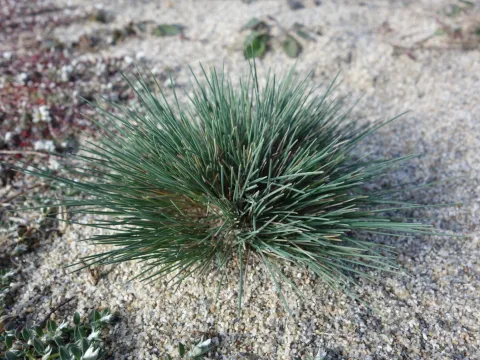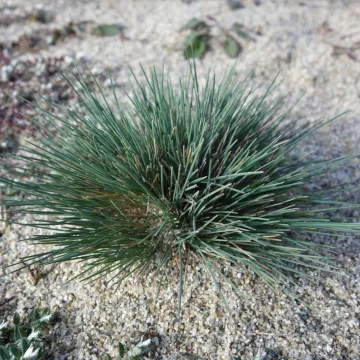
Grey hair-grass
Corynephorus canescens
Description
Grey hair-grass (Corynephorus canescens) is a perennial grass species belonging to the Poaceae family. In agricultural and environmental sciences, it is recognized as a pioneering crop used primarily for stabilizing loose, nutrient-poor, sandy substrates where more demanding plant species cannot thrive.
Originating from Europe and parts of Western Asia, this grass is naturally adapted to habitats such as sand dunes, heathlands, and open pine forests. Its geographical distribution spans across coastal and inland sandy regions, making it a key species for ecological restoration projects aimed at preventing desertification.
The botanical structure of the plant features dense tufts of narrow, greyish-green leaves. Its most distinctive feature is the unique panicle inflorescence with jointed spikelets that disarticulate at maturity. The root system is extensive and deep, allowing the plant to remain anchored and hydrated in shifting sands.
In terms of agronomy, the crop is exceptionally hardy. It requires minimal intervention and performs best on acidic, sandy soils with low nutrient content. Cultural practices involve seeding in open areas with full sun exposure. It is highly drought-tolerant and thrives without the need for synthetic fertilizers or regular irrigation.
The primary economic and environmental applications of Grey hair-grass include:
- Stabilization of dunes and sandy embankments to prevent erosion;
- Restoration of industrial wastelands and sandy mining sites;
- Ground cover in landscaping for low-maintenance sandy areas;
- Prevention of wind-blown sand movement in agricultural zones.
The plant is naturally resistant to many pests and diseases, which is a significant advantage for low-input management systems. While it may occasionally be affected by common rust fungi under conditions of extreme moisture accumulation, these issues rarely impact the population density. Its robust nature makes it a reliable asset for sustainable land management.
Photo gallery