Spiral ginger
Costus curvibracteatus Maas
Description
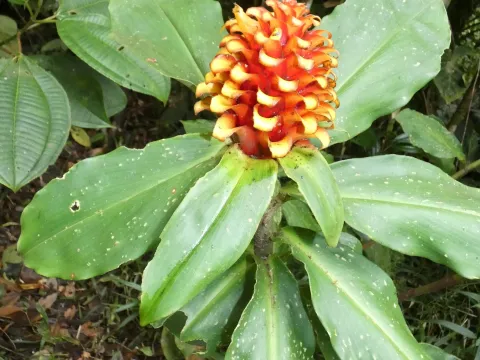
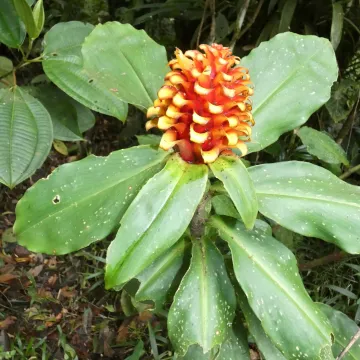
Spiral ginger (Costus curvibracteatus) is a prominent herbaceous perennial belonging to the Costaceae family. Renowned for its unique, curved bracts that form tight, cone-like inflorescences, this plant stands out due to its spiral leaf arrangement. It typically reaches a significant height, making it a focal point in tropical gardens and indoor botanical collections alike.
Native to the humid rainforests of Central and South America, particularly Costa Rica, the species thrives in warm, shaded environments. In agricultural and horticultural contexts, it is grown primarily for its ornamental value. Its ability to produce long-lasting cut flowers makes it a niche commodity in the professional floral market, where it is appreciated for its structural beauty and vibrant colors.
Botanically, Costus curvibracteatus possesses thick rhizomes that store nutrients, allowing the plant to recover during shorter periods of dormancy. The leaves are large, lush, and deep green, providing an excellent backdrop for the striking, waxy bracts. Successful growth relies on the plant's sensitivity to temperature fluctuations, as it requires a consistently warm climate between 20°C and 28°C to bloom properly.
Cultivation requires rich, well-draining soil with an acidic to neutral pH. A common mistake is improper drainage, which leads to root rot, the most detrimental issue for this species. During the active growing season, regular irrigation and high humidity levels are essential. Supplementary fertilization with balanced nutrients helps sustain the rapid biomass production characteristic of this species.
Common issues encountered by growers include:
- Spider mites, which thrive in low-humidity environments.
- Aphid infestations on tender new shoots.
- Fungal infections triggered by poor soil aeration and waterlogging.
- Powdery mildew when air circulation is insufficient.
Photo gallery