
Heartleaf crambe
Crambe cordifolia
Description
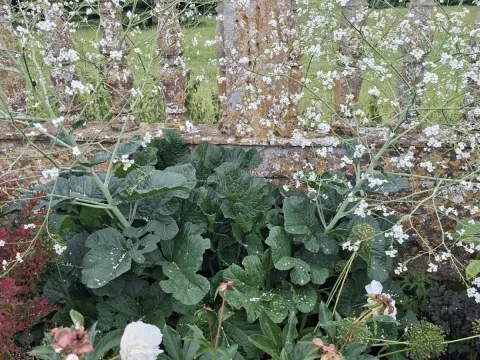
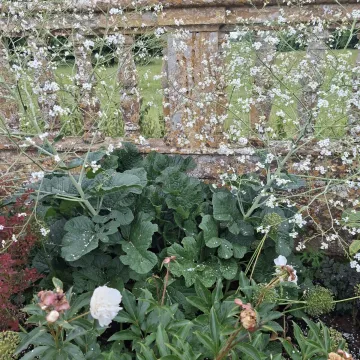
Heartleaf crambe (lat. Crambe cordifolia) is a large herbaceous perennial plant belonging to the Brassicaceae family. Recognized for its impressive size and resilience, it is often utilized as a specialized crop in regions where soil conditions are challenging for conventional farming.
The plant originates from the mountainous and steppe regions of the Caucasus and Asia Minor. Throughout its history, it has adapted to survive in harsh, arid climates, characterized by rocky soil compositions and limited moisture availability. This natural hardiness makes it a robust candidate for cultivation in sustainable agricultural systems.
Botanically, the plant is distinguished by its rapid vertical growth and large, heart-shaped basal leaves. During the blooming season, it produces substantial, airy panicles filled with thousands of tiny white flowers, which can reach heights of up to two meters. The root system is a fleshy, deep-reaching taproot capable of accessing groundwater reserves far below the surface.
Agricultural success with heartleaf crambe depends on site selection. It thrives in well-drained, fertile soil, though it tolerates poorer conditions provided they are not waterlogged. The crop is largely pest-resistant, although growers should monitor for common brassica-related issues such as flea beetles or clubroot if the soil acidity is not properly managed. Regular weed control in the first season is essential until the plant is established.
Economically, the plant is primarily used for its culinary properties, specifically the roots which offer a pungent, sharp flavor similar to horseradish. Beyond culinary uses, the seeds are investigated for their oil content, which has industrial potential. Furthermore, heartleaf crambe serves as a significant ornamental and honey-producing crop, benefiting local biodiversity by supporting pollinator populations.
- High drought tolerance once established.
- Extensive root system improving soil structure.
- Significant biomass production for various uses.
- Cold hardiness suitable for temperate climate zones.
Photo gallery