Tartar sea kale
Crambe tataria
Description
Tartar sea kale (Crambe tataria) is a perennial herbaceous plant belonging to the Brassicaceae family. Known for its robust growth and drought resistance, it is increasingly viewed as an alternative crop for arid regions where traditional vegetables struggle to establish deep, nutritious root systems.
Native to the vast steppes of Eurasia, this plant has adapted to survive in harsh, continental climates. Its historical range extends across Eastern Europe and parts of Central Asia, where it has been traditionally used both as a wild-harvested vegetable and a forage crop in marginal land management systems.
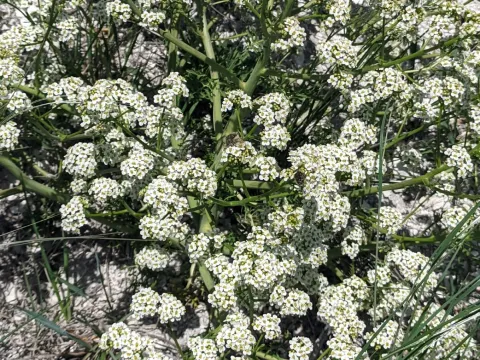
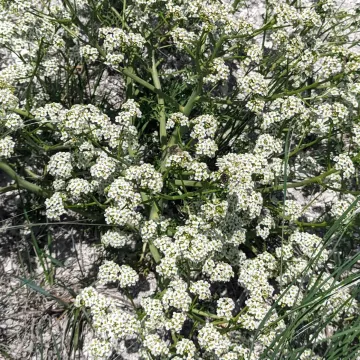
Botanically, Crambe tataria is distinguished by a deep taproot that allows it to access moisture in dry soil horizons. The foliage forms a basal rosette, while the inflorescence is a large, branched panicle that produces numerous small, fragrant white flowers. The plant's dispersal mechanism, typical of the "tumbleweed" strategy, aids its survival in open landscapes.
In terms of cultivation, the plant thrives in well-drained, loose, sandy-loam soils. It requires full sunlight to develop high-quality roots and is highly intolerant of soil compaction and waterlogging. Adequate spacing is essential to ensure proper air circulation and to reduce the incidence of fungal diseases that often affect the root crown.
Agricultural management involves careful monitoring for cruciferous pests such as flea beetles, which can devastate young seedlings. Proper crop rotation is recommended to prevent the buildup of soil-borne pathogens. Despite these challenges, its low water requirement makes it an attractive candidate for sustainable agriculture in water-scarce regions.
- Culinary use: roots used as a flavorful condiment or vegetable ingredient.
- Honey production: excellent nectar source for bees during the spring period.
- Forage potential: utilization of biomass for livestock feed.
- Environmental: soil stabilization in erosion-prone steppe areas.
Photo gallery