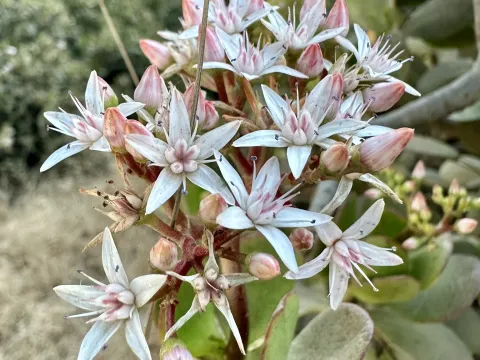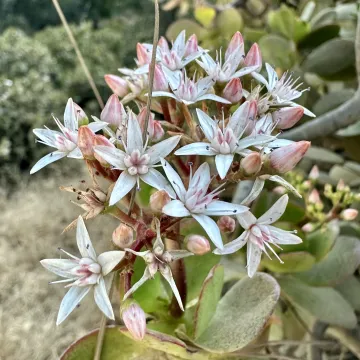
Crassula ovata
Crassula ovata x Kalanchoe thyrsiflora
Description
Crassula ovata, commonly known as the jade plant, is a prominent succulent species belonging to the family Crassulaceae. This ornamental crop is globally recognized for its fleshy, oval-shaped leaves and woody stems. It has become a staple in indoor agriculture due to its extreme drought tolerance and long-living nature.
Originating from the Eastern Cape and KwaZulu-Natal provinces of South Africa, the plant has adapted to rocky and open terrain. In its native habitat, it thrives under intense sunlight and survives cycles of drought by storing significant amounts of water within its cellular tissues, a typical feature of the Crassulaceae family.
Botanically, the jade plant exhibits a succulent habit with thick, opposite leaves that often display a reddish tinge at the edges when exposed to bright light. Its root system is relatively shallow, which makes it prone to damage if the soil remains constantly waterlogged. It typically grows as a small shrub, reaching heights of 1–2 meters in wild conditions.
Cultivation requirements necessitate a well-draining substrate, typically a mixture of potting soil and coarse perlite or sand. Light is the most critical factor for healthy growth; the plant requires several hours of bright, indirect sunlight daily. During the winter, it should be kept in a cooler environment to encourage a period of dormancy, which is essential for future development.
The primary horticultural use of Crassula ovata is decorative, serving as a popular indoor plant and a component of xeriscaping in warmer climates. Regarding health issues, the crop is susceptible to mealybugs and spider mites, which can be managed with biological or chemical control methods. Overwatering remains the greatest threat, leading to root rot and other fungal diseases.
Photo gallery