
Azarole hawthorn
Crataegus azarolus
Description
Azarole hawthorn (Crataegus azarolus) is a distinctive fruit-bearing species within the Rosaceae family. It is widely recognized for its large, flavorful fruits, which differentiate it from the more common ornamental or medicinal hawthorn species.
Originating from the Mediterranean region and Western Asia, this plant is well-adapted to dry, warm climates. It has been historically cultivated as a subsistence crop in Southern Europe and the Middle East, thriving in environments that are often unsuitable for more sensitive orchard trees.
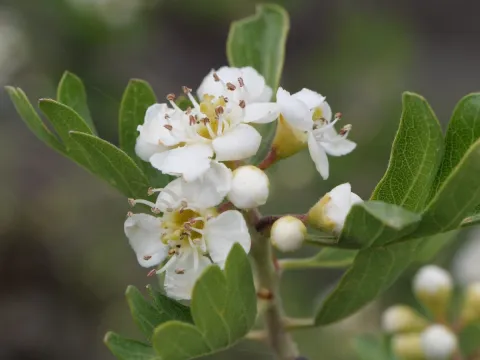
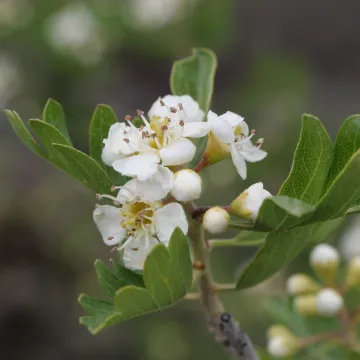
The plant typically grows as a small deciduous tree or a dense shrub. Its foliage is finely serrated, and the flowers are typically white. The fruit, often referred to as the azarole fruit, is fleshy and rounded, typically yellow or orange in color, and possesses a flavor profile often described as a mix between a crabapple and a pear.
Cultivation requires full sun exposure and well-drained, slightly calcareous soils. While drought-tolerant once established, it benefits from irrigation during the fruit-set phase to ensure high quality and volume. Pruning is essential for maintaining canopy health and encouraging the production of fruit-bearing spurs.
The culinary applications of azarole are vast, ranging from raw consumption to processing into preserves, marmalades, and jellies. Because of their high pectin content, the fruits are ideal for thickening jams and are also used in various traditional desserts within their native range.
- Excellent tolerance to Mediterranean drought conditions.
- Nutritional value includes vitamins and high fiber.
- Can be affected by fire blight and certain fungal leaf spots.
- Relatively easy to propagate through grafting on hardy rootstocks.
Photo gallery