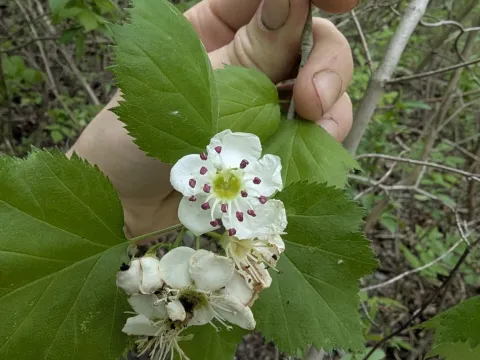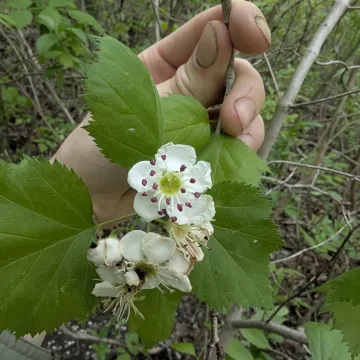

Scarlet hawthorn
Crataegus coccinioides
Description
Scarlet hawthorn (Crataegus coccinioides) is a deciduous shrub or small tree belonging to the Rosaceae family. It is widely recognized for its high ornamental value and structural integrity, making it a preferred choice for residential landscapes and public parks across temperate regions.
The plant originates from North America, where it typically thrives in thickets and forest edges. Its geographical distribution spans a variety of climates, demonstrating the species' inherent robustness and versatility when introduced to new agricultural environments or specialized garden settings.
Botanically, the plant is characterized by its stiff, thorny branches and a dense canopy of foliage. It blooms with clusters of white flowers in spring, which later give way to bright, scarlet-red pome fruits. These fruits remain on the branches into late autumn, providing essential forage for local wildlife and visual interest in the landscape.
Cultivation requirements for scarlet hawthorn involve providing well-drained, fertile soil and full to partial sun exposure. While the plant is drought-tolerant once established, supplemental watering during prolonged dry spells is recommended to ensure vigorous growth. Minimal pruning is required, primarily to remove dead wood or to maintain a desired shape.
- Plant in well-drained loamy soil.
- Apply slow-release organic fertilizers in spring.
- Prune during the dormant season.
- Monitor for common hawthorn pests like aphids or rust.
In terms of agricultural and landscape use, the scarlet hawthorn serves as an excellent hedge plant due to its dense growth habit and protective thorns. Beyond its aesthetic appeal, the fruit is traditionally processed for culinary use, and the shrub contributes to local biodiversity by providing habitat for various avian species.
Photo gallery