Green hawthorn
Crataegus viridis
Description
Green hawthorn (Crataegus viridis) is a deciduous tree belonging to the Rosaceae family. Known for its aesthetic appeal and structural beauty, this tree is a popular choice for urban landscaping and residential gardens, offering interest throughout all four seasons.
Originating from the southeastern United States, this species is naturally adapted to moist environments, including riverbanks and bottomland forests. Its ability to tolerate wet soils makes it an excellent candidate for challenging planting sites where other tree species might struggle to establish roots.
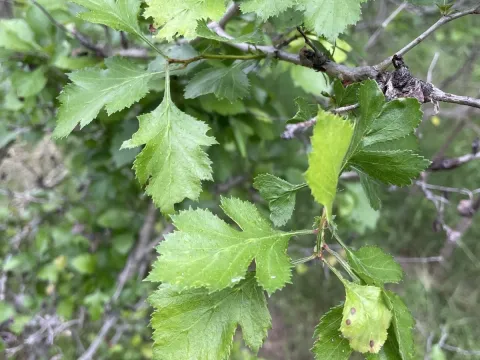
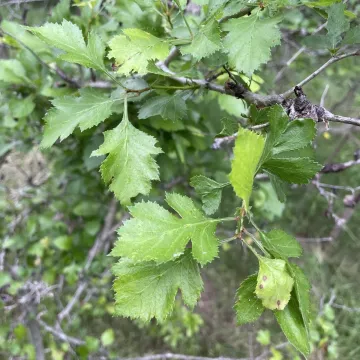
Botanically, it is recognized by its smooth, peeling bark that creates a mottled pattern of tan, grey, and orange. The foliage consists of alternate, serrated leaves that turn vibrant shades of red and purple in the autumn. Small white flowers emerge in spring, followed by dense clusters of bright red pomes that persist well into the winter months.
Regarding agrotechnical requirements, the green hawthorn thrives in full sun to partial shade and prefers well-drained, slightly acidic, fertile soil. While it is tolerant of moisture, it should not be planted in standing water. Regular pruning should be performed in late winter or early spring to remove crossing branches and maintain the desired tree shape.
The tree is generally robust, but gardeners should monitor for common issues such as fire blight, rusts, and leaf spot. Proper spacing to ensure good air circulation is essential for disease prevention. In landscape architecture, it is effectively used as a specimen tree, along borders, or integrated into naturalistic planting schemes to support local bird populations with its persistent fruit.
- Excellent winter interest due to red fruit.
- Highly tolerant of urban pollution.
- Low maintenance after establishment.
Photo gallery