
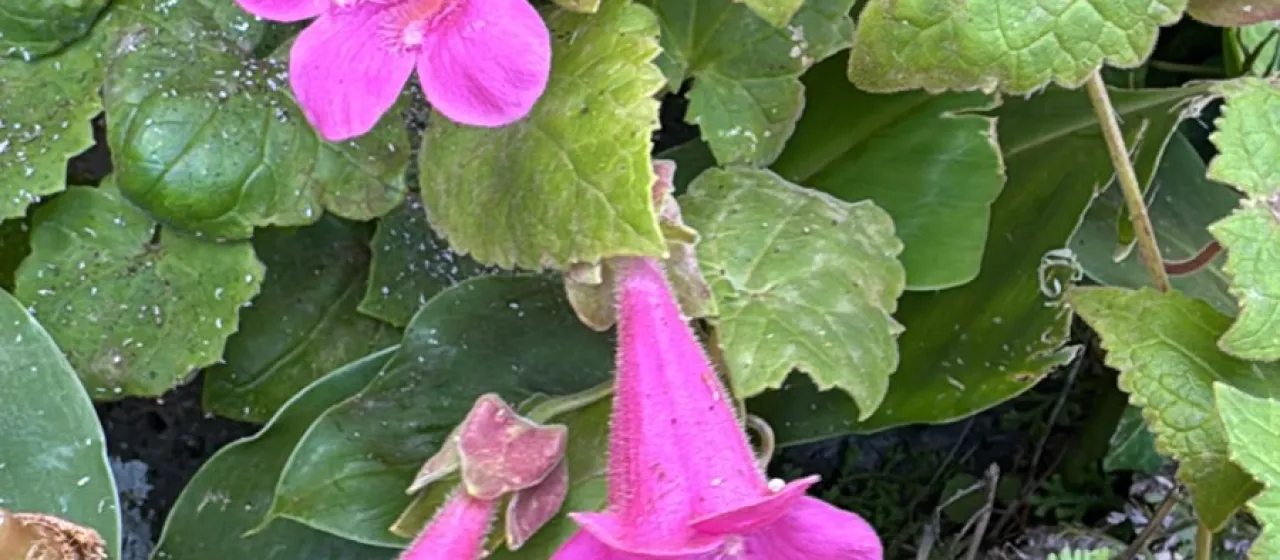
Description
Creeping gloxinia (Lophospermum erubescens) is a vigorous, climbing perennial vine belonging to the Plantaginaceae family. Historically classified within the Scrophulariaceae family, this plant is widely appreciated in horticulture for its rapid growth, large tubular flowers in shades of pink to deep rose, and attractive, soft-textured, heart-shaped leaves.
Native to the mountain regions of Mexico, this plant thrives in warm, temperate climates. In colder regions, it is typically grown as an annual because it is not frost-hardy and cannot survive freezing winter temperatures. Despite this, its fast-growing nature allows it to cover walls, trellises, and fences effectively within a single growing season, often reaching heights of several meters.
The botanical structure of the plant features specialized petioles that act like tendrils, curling around supports to anchor the stems securely. The blooms appear in clusters, providing a continuous display of color from late spring until the first autumn frosts. Its moderate root system makes it well-suited for container gardening, where it can provide a cascading effect in hanging baskets or tall planters.
Agrotechnical success with Lophospermum erubescens depends on providing a sunny location sheltered from strong, drying winds. The soil should be fertile, well-draining, and rich in organic matter to support the rapid production of stems and foliage. Regular irrigation is essential to keep the root zone consistently moist but never waterlogged, as excessive standing water can lead to root decay.
Recommended cultivation practices include:
- Starting seeds indoors 8–10 weeks before the last frost date.
- Providing sturdy vertical supports to accommodate the plant's reaching habit.
- Deadheading faded flowers to encourage energy redirection towards new blooms.
- Applying balanced liquid fertilizers every two weeks during the active growth phase.
The primary pests affecting this species are spider mites and aphids, especially when grown in containers or areas with restricted airflow. Monitoring the undersides of the leaves for early signs of infestation is crucial. Proper ventilation and avoiding overhead irrigation can significantly reduce the risk of common fungal diseases such as powdery mildew or leaf spot.