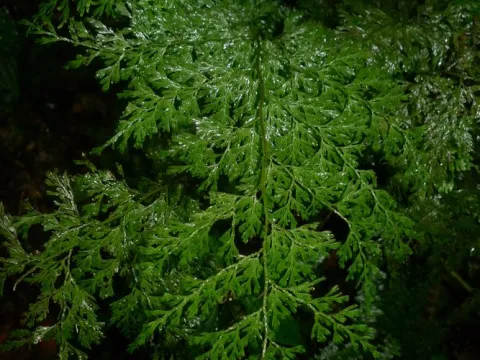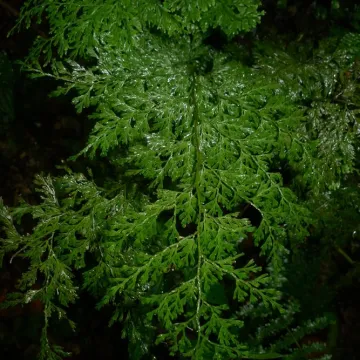
Crepidomanes maximum
Crepidomanes maximum
Description
Crepidomanes maximum is a remarkable fern species belonging to the Hymenophyllaceae family. Within the scope of specialized horticulture and ornamental plant production, this species is highly regarded for its delicate structure and its ability to thrive in extremely humid environments, making it a staple for premium aquascaping and terrarium setups.
Originating from the tropical rainforests of Southeast Asia, the plant is naturally distributed across Indonesia and neighboring regions. It typically occupies niches on wet rocks or tree trunks in close proximity to waterfalls or flowing streams. This natural preference for high-humidity, shaded environments defines its fundamental physiological requirements for survival and development in controlled agricultural settings.
From a botanical standpoint, the plant is characterized by its thin, translucent, and finely dissected fronds that are often only a single cell layer thick. It utilizes a tough, creeping rhizome to anchor itself firmly onto hard substrates. This morphological adaptation allows the fern to survive in high-energy water environments where other plant species would likely be washed away or damaged.
The cultivation of this fern requires strict adherence to environmental controls rather than traditional soil-based fertilization. Key agricultural practices include:
- Maintaining a constant humidity level near saturation.
- Regulating temperatures to prevent heat stress, ideally between 20°C and 26°C.
- Ensuring low to moderate light intensity to prevent algal blooms on the delicate fronds.
- Using inert, non-degradable substrates that facilitate water movement around the rhizome.
Economically, Crepidomanes maximum serves the ornamental market, specifically for high-end aquatic botanical arrangements. Its slow growth rate makes it a high-value, low-volume crop that requires patience and expertise to propagate. Typical management challenges include managing pests like snails or microscopic algae, which can easily overwhelm the slow-growing foliage if the system balance is compromised.
Photo gallery