Crepidorhopalon rupestris
Crepidorhopalon rupestris
Description
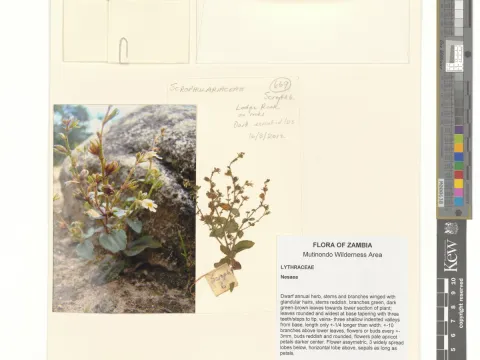
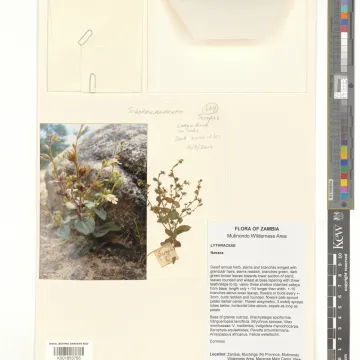
Crepidorhopalon rupestris is an herbaceous plant belonging to the Linderniaceae family. As a specialized botanical subject, it has gained attention for its unique adaptation to lithophytic life, where it grows primarily on rocky surfaces. This species is often studied in botanical research due to its classification history and distinct physiological traits that differentiate it from other members of the Linderniaceae order.
The plant originates from the tropical regions of Africa, where it inhabits specific niches such as rocky outcrops and steep cliffs. Its distribution is quite restricted, making it a rare sight in both its native wild environment and in human-managed settings. Cultivation of Crepidorhopalon rupestris is typically limited to specialized botanical collections, research facilities, and hobbyists interested in rare flora.
Botanically, it features a small, low-growing structure, allowing it to withstand harsh environmental conditions. The leaves are generally arranged in an opposite pattern, and the root system is highly adapted to anchor the plant firmly into minimal substrate found within rock fissures. The flowers are small, often tubular, showcasing evolutionary adaptations tailored for specific pollinators found in its local habitat.
The climate requirements for this species include steady, warm temperatures and consistent, though not excessive, humidity. Soil or substrate requirements are critical; it demands high drainage to mimic the rocky terrain of its origin. Proper agrotechnical practices focus on avoiding water stagnation around the roots, as excessive moisture leads to rapid root rot and fungal colonization.
Host use remains strictly scientific and ornamental rather than agricultural. It is not a commercial crop in the traditional sense, but it serves as a valuable resource for studying plant resilience. Typical diseases involve fungal pathogens stemming from poor ventilation, while common pests include spider mites and aphids, which are often found in indoor cultivation settings if humidity and airflow are not balanced correctly.
- Thermal needs: 22°C to 26°C for optimal growth.
- Light exposure: Bright, indirect sunlight is essential.
- Growing medium: Rocky, well-draining mineral-based substrate.
- Care tip: Ensure excellent airflow to prevent fungal growth.
Photo gallery