Small-flowered hawksbeard
Crepis micrantha
Description
Small-flowered hawksbeard (Crepis micrantha) is an annual herbaceous plant belonging to the Asteraceae family. In agriculture, it is recognized as a persistent weed that significantly interferes with crop development by competing for water, nutrients, and sunlight in cultivated fields.
Native to vast regions of Eurasia, this species has successfully adapted to a variety of environments. It is frequently observed in disturbed soil habitats, including agricultural land, roadsides, and meadows. Its wide distribution is largely due to its high phenotypic plasticity, allowing it to thrive under varying climatic conditions.
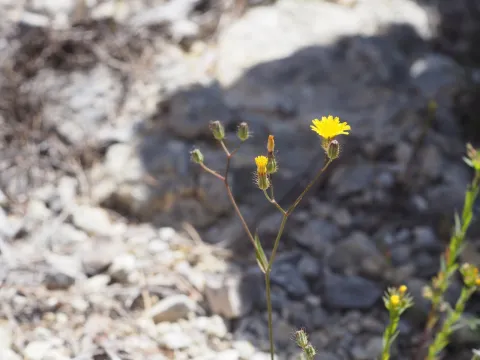
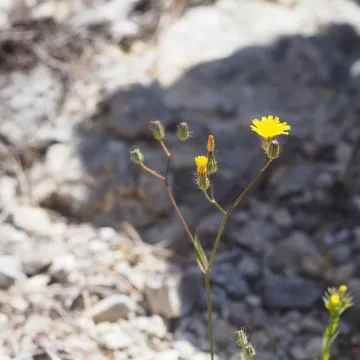
Botanically, Crepis micrantha is identified by its rosette of basal leaves and a slender, branching stem crowned with yellow flower heads. The plant utilizes a taproot system, which helps it establish rapidly in diverse soil types, including sandy, loamy, and clay-rich soils, often outcompeting slower-growing crop seedlings during the early spring.
Agronomic management of this species is essential for maintaining crop yield. The plant reproduces via abundant wind-dispersed seeds, making it a prolific spreader. Effective control strategies involve a combination of mechanical methods, such as timely tillage to uproot young rosettes, and chemical applications using selective herbicides during the early growth stages before seed set occurs.
While not commonly used as a commercial crop, its presence is a significant challenge for farmers. Typical pests and diseases, such as aphids or certain fungal pathogens, may inhabit the weed, subsequently spreading to economically important crops. Managing Crepis micrantha is thus a critical component of integrated pest management (IPM) in modern agricultural systems.
- Rapid growth cycle in spring.
- High seed production efficiency.
- Wind-assisted seed dispersal mechanisms.
- Significant nutrient depletion in fields.
Photo gallery