Palestinian hawk's-beard
Crepis palaestina
Description
Palestinian hawk's-beard (Crepis palaestina) is an herbaceous plant species belonging to the Asteraceae family. It is recognized as a hardy annual that plays a role in the biodiversity of arid landscapes, functioning as an important component of the local grazing ecosystem.
The species originates from the Mediterranean and Near Eastern regions, specifically adapting to the distinct climate cycles of these areas. Its distribution is primarily limited to scrublands and semi-arid zones where other crops struggle to establish due to the high intensity of solar radiation and erratic rainfall.
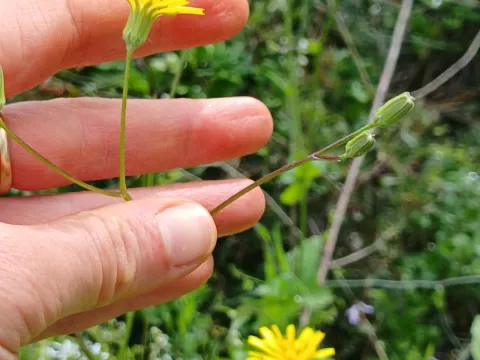
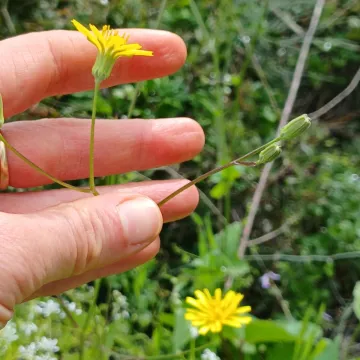
Botanically, it features a characteristic rosette of leaves and produces yellow capitula (flower heads) on slender, branching stems. The plant is equipped with mechanisms for efficient seed dispersal through pappus-bearing achenes, which allows the species to quickly colonize disturbed ground in its native habitat.
For cultivation, Crepis palaestina requires well-drained, sandy or loamy soils with adequate exposure to sunlight. It is highly drought-tolerant but performs poorly in waterlogged conditions. Agricultural management is minimal, typically involving weed control in early stages to prevent competition, though it is usually treated as a naturalized component of pasture.
- Requires minimal irrigation.
- Thrives in alkaline soils.
- Compatible with other drought-resistant forage legumes.
The primary economic use is as forage for livestock, particularly during the early spring flush of green matter. The plant is susceptible to common pasture pests such as aphids and, in humid conditions, can be impacted by fungal pathogens that thrive on the leaf surfaces, necessitating proper drainage to mitigate these risks.
Photo gallery