Pygmy hawksbeard
Crepis pygmaea
Description
Pygmy hawksbeard (Crepis pygmaea) is a perennial herbaceous plant belonging to the Asteraceae family. In agricultural terms, it is considered a specialized alpine species valued for its exceptional ability to thrive in harsh, high-altitude mountain environments where many standard crops would fail.
The plant originates from the mountainous regions of Europe. Its natural habitat consists primarily of scree slopes and rocky alpine meadows. This heritage has endowed the species with the ability to survive in environments characterized by thin, rocky soils and significant daily temperature fluctuations.
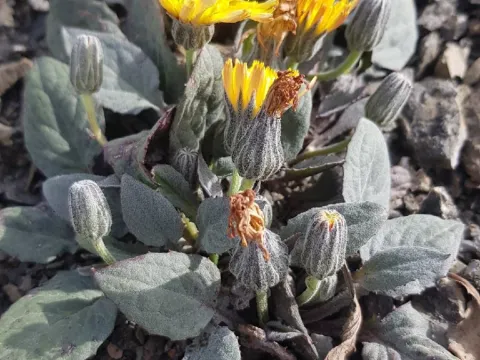
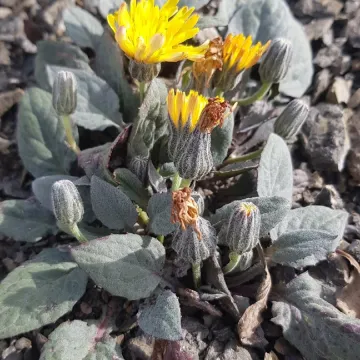
Botanically, the plant is distinguished by a low-growing, compact habit with a basal rosette of leaves. The stem is typically short and covered with fine hairs, which help to minimize water loss and provide protection against intense ultraviolet radiation. The yellow flowers form characteristic daisy-like heads that bloom during the brief summer period.
In terms of cultivation, Pygmy hawksbeard requires well-drained, porous, and lime-rich soil to mimic its natural scree habitat. Standard agronomic practices emphasize the importance of full sun exposure and avoiding water stagnation. Due to its adaptation to low-nutrient soils, the plant does not require high levels of nitrogen fertilizer for maintenance.
The agricultural usage of this species focuses on land reclamation and soil stabilization on mountain slopes. By preventing soil erosion, it serves an important ecological role. While not a primary commercial crop, it is studied by plant breeders for potential traits regarding cold and drought resistance that could be transferred to more conventional forage species.
- Typical pests: aphids, spider mites.
- Common diseases: fungal infections such as powdery mildew in humid conditions.
Photo gallery