Terglou hawkbit
Crepis terglouensis
Description
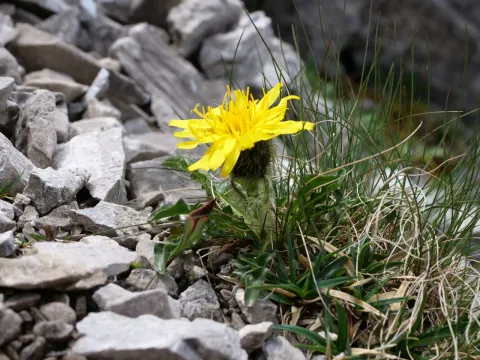
Terglou hawkbit (lat. Crepis terglouensis) is a perennial herbaceous plant belonging to the Asteraceae family. In agronomic contexts, it is recognized as a rare high-altitude species that has developed specialized mechanisms to survive in harsh mountain environments.
The plant originates from the mountainous regions of the eastern Alps, specifically inhabiting stony terrain and limestone screes. Its natural distribution is restricted to alpine zones, where the plant effectively utilizes short growing seasons to complete its biological cycle.
Botanically, it is characterized by a compact rosette of leaves and a short, sturdy stem, which provides protection against high-velocity winds. Its flowers form yellow composite heads that are typical for the genus Crepis, adapted for pollination by specific alpine insects.
In terms of cultivation, the plant requires excellent drainage and mineral-rich, calcium-heavy soils. Agrotechnical management centers on mimicking the scree environment, ensuring that the roots remain cool and well-aerated while receiving intense solar exposure during the peak season.
The primary use of Crepis terglouensis is currently limited to botanical gardens and specialized nurseries focusing on rare alpine flora. While it has few natural pests, growers must monitor for root-related fungal issues that can occur if the growing medium loses its porosity or becomes waterlogged.
Photo gallery