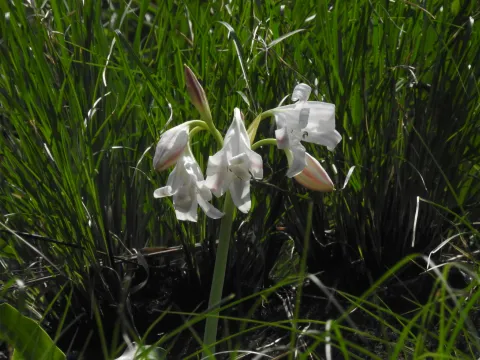

Crinum latifolium
Crinum latifolium L.
Description
Crinum latifolium L. is a prominent perennial bulbous plant belonging to the Amaryllidaceae family. Recognized for its structural grandeur, this species develops large, fleshy bulbs that serve as a storage organ, supporting the plant through various growth cycles and making it a resilient specimen in specialized cultivation environments.
Originating from the tropical regions of Asia, specifically India and surrounding countries, this plant thrives in warm, humid climates. Its natural habitat includes riverbanks and moist forested areas, which dictates its high water and humidity requirements when grown as a crop. In agricultural contexts, it is increasingly cultivated for its medicinal properties, notably the extraction of specific alkaloids used in healthcare.
The botanical characteristics of Crinum latifolium are defined by its broad, strap-like leaves forming a dense rosette, and majestic inflorescences featuring large, fragrant flowers. The bulb itself is significant in scale, requiring ample space and a robust, well-draining soil medium to prevent waterlogging, which is a critical aspect for successful commercial production.
Agricultural requirements include a consistent tropical temperature range, usually between 20°C and 28°C, and bright, indirect light. Soil health is paramount; it requires a nutrient-rich, porous substrate that allows for deep root penetration. Propagation is primarily achieved through the removal of offsets (bulblets) produced at the base of the parent bulb, ensuring genetic consistency and healthy plant development.
In terms of plant health, Crinum latifolium is susceptible to typical pests such as spider mites, aphids, and mealybugs. Pathogenic risks include basal rot and fungal infections, usually triggered by excessive moisture or poor ventilation. Integrated pest management and strict control over irrigation regimes are essential to maintain the productivity and vitality of this valuable agricultural crop.
Photo gallery