Crocidium multicaule
Crocidium multicaule
Description
Crocidium multicaule, commonly known as Goldstar, is a small annual herbaceous plant belonging to the Asteraceae family. It is the sole member of the genus Crocidium, making it a unique botanical subject primarily found in the western regions of North America, extending from British Columbia down to California.
The plant is native to a variety of habitats including grasslands, open slopes, and rocky terrain. Its evolutionary adaptation allows it to thrive in climates characterized by wet, cool winters and springs, followed by hot, dry summers that trigger the plant's life cycle to complete before the onset of extreme heat.
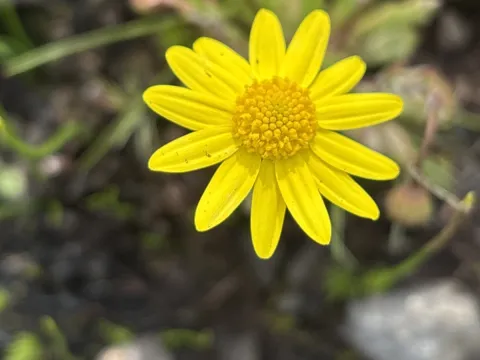
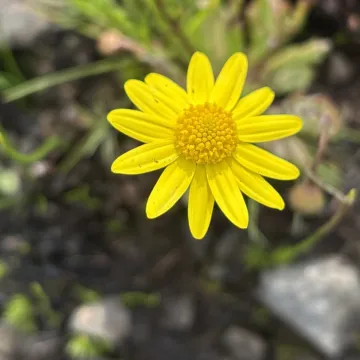
Botanically, Crocidium multicaule is distinguished by its thin, branched stems that grow to a height of about 5 to 20 centimeters. The leaves are arranged in a basal rosette and are also distributed along the stems. The most striking feature is its bright yellow daisy-like flower heads, which bloom early in the spring, creating large, vibrant colonies in favorable conditions.
Regarding its requirements, the plant relies on well-drained, sandy or gravelly soils. It is sensitive to soil compaction and waterlogging. In terms of cultivation, it is often categorized as a spring ephemeral, meaning it requires specific timing for seed germination. It is rarely grown commercially but is valued in native plant gardening for its early-season color and hardiness.
- Requires full sun exposure for optimal blooming.
- Thrives in lean, nutrient-poor, well-drained soils.
- Completes its life cycle rapidly before the arrival of summer drought.
- Subject to grazing by small herbivores and potential competition from invasive annual grasses.
While not affected by major agricultural pests in the conventional sense, the plant's main challenges include habitat degradation and competition from non-native invasive plant species. Proper management of its environment involves maintaining open canopy spaces and avoiding excessive nitrogen fertilization that may favor competing weeds.
Photo gallery