
Carpetanus crocus
Crocus carpetanus Boiss. & Reut.
Description
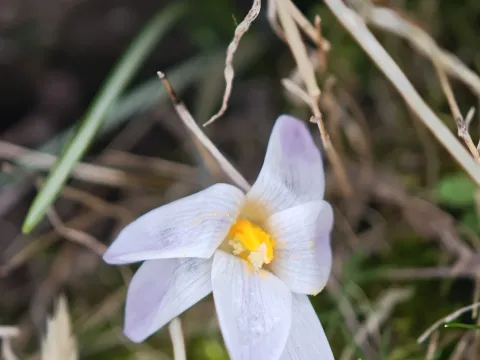
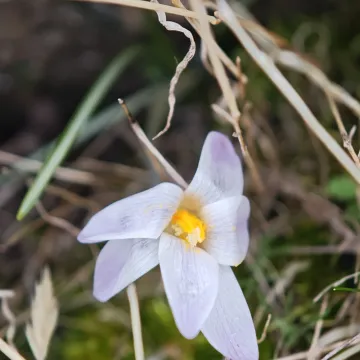
The Carpetanus crocus (Crocus carpetanus) is a perennial bulbous plant belonging to the Iridaceae family. Unlike many other species within the genus, this plant is notable for the absence of basal tunics on its corm. Its flowers typically exhibit a pale lilac to white coloration, characterized by distinctive dark veins that provide an elegant appearance.
The origin of this species is traced to the mountainous regions of the Iberian Peninsula, particularly in Spain and Portugal. It is naturally adapted to high-altitude environments, often found in alpine meadows where it begins its life cycle as soon as the winter snow begins to melt, demonstrating a high degree of resilience to cool spring weather.
Botanically, the plant features narrow, grass-like leaves and compact growth. The corm is covered with a reticulated fibrous tunic, a key identification feature. Its life cycle is synchronized with early spring temperatures, making it a specialized plant that requires precise timing for both vegetative growth and dormancy.
Cultivation requirements necessitate a well-drained, sandy or loamy soil substrate. Proper air circulation and moisture control are essential, as this species is highly susceptible to rot if left in waterlogged conditions during its dormant summer phase. It thrives best in locations that receive full sun during the spring but remain relatively dry throughout the summer.
The primary use of this plant is for ornamental purposes, specifically in rock gardens and alpine beds where its early flowering period is highly valued. Maintenance involves standard monitoring for common bulb pests such as rodents and fungal pathogens. Preventing soil compaction and ensuring organic matter balance in the soil are critical for long-term health and consistent annual blooming.
Photo gallery