Crotalaria dissitiflora
Crotalaria dissitiflora
Description
Crotalaria dissitiflora is a herbaceous legume species belonging to the Fabaceae family. Widely recognized in agricultural circles for its potential as a green manure and cover crop, this plant is valued for its contribution to soil health and fertility management through atmospheric nitrogen fixation.
Native to Australia, the species has naturally evolved in environments characterized by variable rainfall and high temperatures. This inherent resilience to harsh conditions makes it a suitable candidate for restorative cropping systems in regions where drought tolerance is a necessary trait for crops.
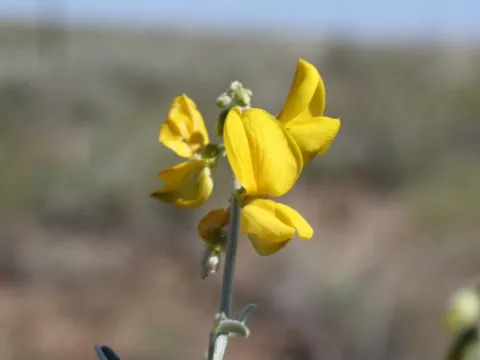
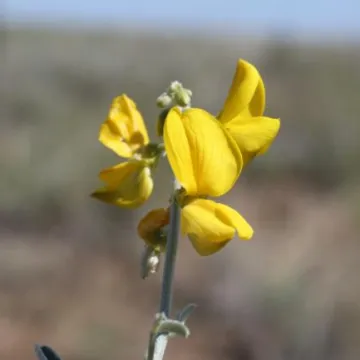
The morphology of this plant features a deep taproot system, which helps in breaking up compacted soil layers. The stems are typically upright and branched, covered in fine hairs, while the inflorescences consist of bright yellow flowers arranged in a loose, open pattern, distinguishing it from other legumes.
Regarding cultivation, Crotalaria dissitiflora requires full sun exposure and well-draining soil to thrive. It performs poorly in waterlogged conditions, which can trigger fungal diseases and root rot. Soil pH should ideally be neutral to slightly acidic to maximize the effectiveness of nitrogen-fixing bacteria.
- Increasing soil organic matter content.
- Enhancing soil nitrogen levels naturally.
- Preventing soil degradation and erosion.
- Providing biomass for composting or mulch.
The plant is occasionally susceptible to pests such as lepidopteran larvae that target the foliage. Furthermore, careful monitoring for soil-borne pathogens is recommended during the seedling stage. Implementing a proper crop rotation strategy helps mitigate these risks and ensures high biomass yields throughout the growing season.
Photo gallery