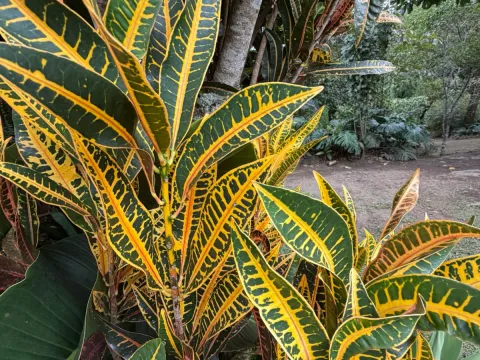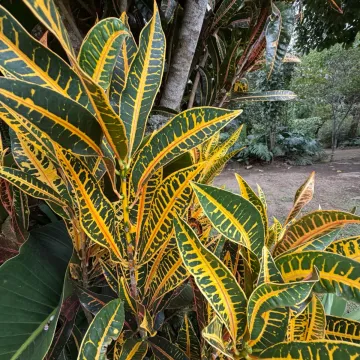
Codiaeum variegatum
Codiaeum variegatum (L.) A. Juss.
Description
Codiaeum variegatum is a prominent evergreen ornamental shrub belonging to the Euphorbiaceae family. Known commonly as croton, it is widely recognized for its vibrant, variegated foliage that displays a stunning spectrum of colors including yellow, orange, red, and dark green.
The species is native to the tropical regions of Southeast Asia and the Western Pacific islands. While it thrives outdoors in tropical climates, it is predominantly managed as a greenhouse or interior plant in temperate regions, requiring controlled environments to mimic its natural habitat.
Botanically, the plant features leathery, alternate leaves that vary significantly in size and shape depending on the cultivar. These plants require consistent exposure to bright, indirect light to maintain their intense leaf pigmentation, as lower light levels often lead to color loss.
Agronomic requirements for Codiaeum variegatum include a well-drained, nutrient-rich soil with a slightly acidic pH. Consistent soil moisture is crucial, but waterlogging must be avoided to prevent root diseases. The plant also demands high relative humidity to maintain leaf health and prevent desiccated margins.
In terms of economic usage, Codiaeum variegatum is a staple in the ornamental horticultural industry. It is highly valued for commercial interior landscaping and greenhouse production, serving as a primary focal point in decorative floral arrangements and public displays.
- Spider mites — the most common pest, thriving in low humidity.
- Scale insects — frequent sap-sucking pests causing leaf damage.
- Mealybugs — can cause severe stunting and leaf drop if uncontrolled.
- Root rot — a common condition resulting from excessive moisture and poor drainage.
Photo gallery