Croton dichogamus
Croton dichogamus
Description
Croton dichogamus is a woody shrub belonging to the Euphorbiaceae family. It is recognized for its structural complexity and ability to thrive in challenging environments. The species is structurally classified as a perennial shrub, often reaching heights that provide effective soil cover and local ecosystem stability in its native habitats.
Originating from the tropical and subtropical regions of Eastern Africa, this plant has adapted to the distinct wet and dry seasons characteristic of savanna climates. Its geographical distribution spans across countries like Kenya and Tanzania, where it is a significant part of the indigenous vegetation, often found in rocky areas or transition zones between forests and grasslands.
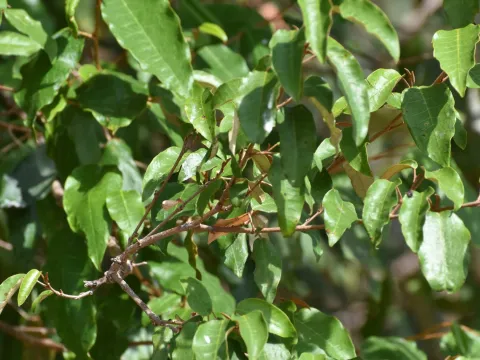
Botanically, the plant is characterized by its small, stellate-hairy leaves and modest floral structures typical of the Croton genus. The root system is notably resilient, designed to penetrate compact soils to reach moisture reserves. These physiological traits make the species a strong candidate for low-input agricultural systems in arid territories.
The cultivation of Croton dichogamus requires minimal maintenance but specific soil conditions. It thrives best in well-drained, sandy or loamy substrates where waterlogging is impossible. Being a sun-loving plant, it requires full sun exposure to reach its peak growth potential. Propagation is generally achieved through seeds or stem cuttings, ensuring adequate spacing between plants to prevent the spread of localized diseases.
From a usage perspective, the plant is valued for both ecological and chemical purposes. Its dense structure serves as a natural windbreak, preventing soil erosion in degraded areas. Furthermore, local studies have indicated the presence of bioactive compounds in the leaves and roots, which are utilized in traditional medicine and organic pest management. Common challenges include typical foliage pests such as spider mites, which can be managed through sustainable integrated pest management (IPM) practices.
Photo gallery