
Lindheimer's croton
Croton lindheimeri
Description
Lindheimer's croton is a perennial herbaceous plant belonging to the large and diverse Euphorbiaceae family. In its natural habitat, it functions as a low-growing shrub or herb valued for its exceptional adaptability to challenging environmental conditions. While not widely grown as a mainstream commercial crop, it is gaining attention in the fields of ecological restoration and sustainable landscaping in arid climates.
The origin of this species is deeply rooted in North America, specifically within the central and southern parts of Texas and adjacent areas in Mexico. It thrives in open, sun-exposed landscapes, often colonizing rocky terrains, limestone outcrops, and native prairies. Its geographical range is defined by unique ecological niches characterized by high seasonal heat and limited precipitation.
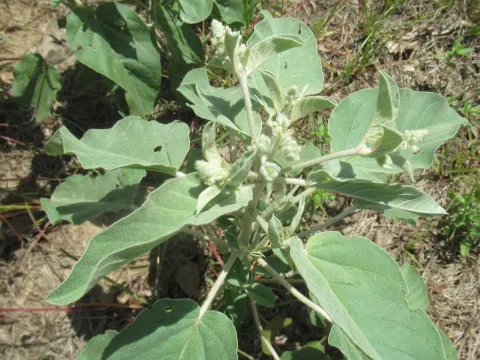
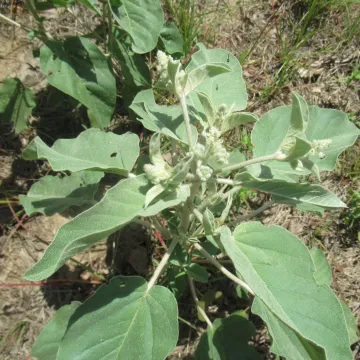
Botanical characteristics of the species include the presence of milky sap typical of the Euphorbiaceae family and distinct silvery-gray foliage covered in stellate hairs. These hairs serve as a vital evolutionary adaptation, reflecting sunlight and reducing water loss through transpiration. The plant possesses a robust root system capable of accessing deep groundwater, allowing it to survive prolonged dry spells that would be fatal to other vegetation.
Agricultural requirements for Lindheimer's croton primarily focus on ensuring excellent soil drainage, as the species is highly susceptible to root rot if waterlogged. It performs well in poor, alkaline soils and does not require substantial applications of synthetic fertilizers. Propagation is primarily achieved through seeds, and the plant exhibits remarkable resilience when exposed to the extreme thermal fluctuations characteristic of its native habitat.
- High tolerance to drought and extreme heat conditions.
- Adaptability to nutrient-poor and calcareous soils.
- Protective stellar pubescence on vegetative structures.
- Natural resistance to intense UV radiation exposure.
While the economic application of Croton lindheimeri remains specialized, it shows great promise for soil stabilization and xeriscaping projects. The plant generally faces few threats from pests or diseases when cultivated under correct conditions. Potential issues, such as powdery mildew or spider mite infestations, are mostly limited to instances where airflow is restricted or moisture levels are artificially kept too high for the plant's biological needs.
Photo gallery