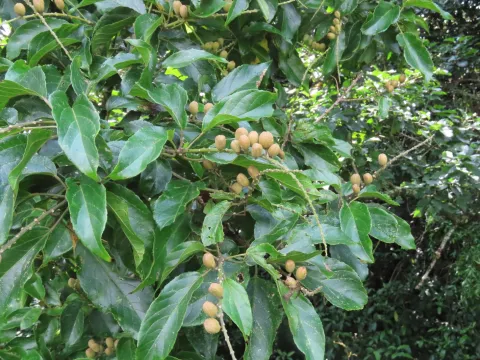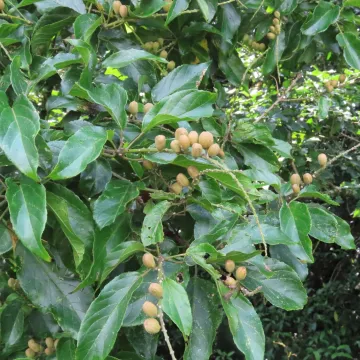
Forest croton
Croton sylvaticus
Description
Forest croton (Croton sylvaticus) is a prominent tree species belonging to the Euphorbiaceae family. It is widely recognized in African agriculture for its rapid growth rate and ecological contributions, making it a key component in forest restoration and agroforestry systems.
The natural distribution of this crop spans across the southern and eastern parts of Africa. It thrives in diverse habitats, ranging from dense evergreen forests to savannah edges and riverine environments, where it plays a critical role in maintaining local soil humidity and biodiversity.
Botanically, it is an evergreen tree that can grow up to 20 meters tall. Its distinct botanical features include a dense, spreading canopy and small, clustered flowers that provide essential forage for various pollinators. The plant's ability to produce specific secondary metabolites acts as a natural deterrent against common agricultural pests.
Optimal cultivation requires fertile, well-draining soil and a stable moisture supply during the initial growth phases. While the plant is quite hardy, it thrives best in warm, frost-free climates. Successful management involves regular monitoring for soil acidity levels and ensuring that the tree is placed in a location with adequate semi-shade in early life stages.
The economic and agricultural utility of Forest croton is vast, ranging from the production of light timber to its extensive application in traditional medicine. It is frequently employed in sustainable agricultural projects as a live fence or a shade provider for intercropping systems, demonstrating its versatility as a multifunctional crop.
- Fast growth cycle for biomass production.
- Significant role in erosion control.
- Resilience against many traditional tree pathogens.
- Traditional medicinal properties of bark and leaves.
Photo gallery