Common crupina
Crupina crupinastrum
Description
Common crupina (Crupina crupinastrum) is an annual herbaceous plant belonging to the Asteraceae family. It is recognized as a significant weed species due to its competitive nature and ability to rapidly colonize disturbed landscapes and agricultural environments.
Originating from the Mediterranean region and parts of Southeast Europe, the plant has expanded its range significantly over time. It has now become an invasive threat in various parts of the world, including North America, where it thrives in rangelands, pastures, and along roadsides.
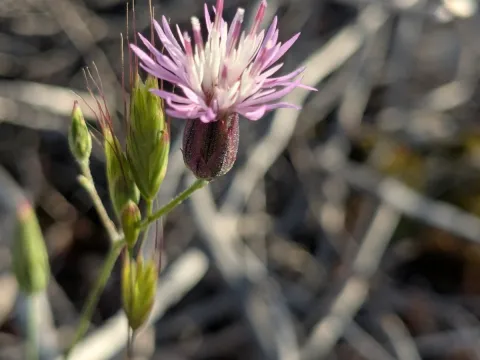
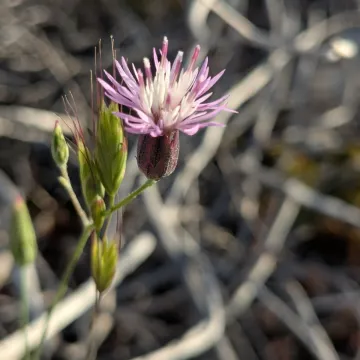
The plant features a slender, branched stem that can grow up to 80 cm in height. Its foliage is deeply lobed, and the flower heads consist of small, tubular florets in shades of pink or purple. The seeds are distinctively marked by stiff bristles, which facilitate dispersal by animal fur and machinery.
Common crupina thrives in well-drained, alkaline soils and is highly adapted to semi-arid climates. Agricultural management requires a proactive approach, primarily focusing on preventing seed set. Methods include:
- Early season mechanical mowing before flowering.
- Strategic grazing management.
- Application of selective herbicides in early growth stages.
- Rigorous monitoring of machinery to prevent seed spread.
In terms of economic impact, the plant is considered a nuisance in livestock production. It lacks nutritional value for cattle and can be toxic if consumed in large quantities. Due to its resilience, common crupina remains a focus of phytosanitary regulations aimed at protecting crop yields and maintaining healthy pasture ecosystems.
Photo gallery