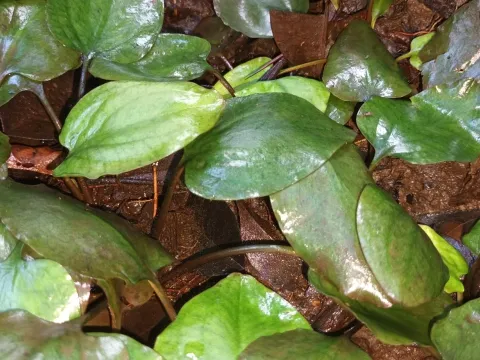
Cryptocoryne griffithii
Cryptocoryne griffithii
Description
Cryptocoryne griffithii is a perennial swamp plant belonging to the Araceae family. Known for its distinct morphological traits, this species is highly regarded in the horticultural sector as an ornamental aquatic crop, prized for its slow growth habit and unique dark-toned foliage that adds depth to underwater landscapes.
The origin of this species is traced back to the humid tropical regions of Southeast Asia, specifically Malaysia and Indonesia. In its natural habitat, the plant thrives along the banks of slow-moving streams and within shaded, muddy environments, often subjected to seasonal inundation and high atmospheric humidity.
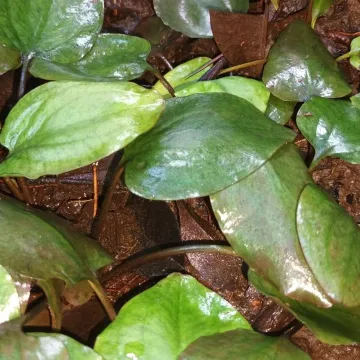
Botanically, the plant is characterized by a rhizomatous structure with long-petioled leaves forming a basal rosette. The leaf blades typically display a heart-like or elliptical shape with a glossy, deep green upper surface and a reddish-purple underside, which is a signature feature of healthy specimens grown in nutrient-rich conditions.
Cultural requirements involve maintaining stable aquatic conditions, with an ideal temperature range of 22°C to 28°C. The substrate must be nutrient-dense, preferably composed of fine-grained clay or specialized aquatic soil. Consistent lighting and controlled water parameters are critical for preventing physiological stress, which can lead to leaf disintegration.
In terms of economic use, Cryptocoryne griffithii is widely cultivated for the aquarium trade and botanical garden displays. Regarding health issues, growers must be wary of 'crypt rot', often triggered by sudden changes in water chemistry. Pests such as snails or algae bloom are common threats that can compromise the plant's structural integrity if left unmanaged.
Photo gallery