Ctenidium procerrimum
Ctenidium procerrimum
Description
Ctenidium procerrimum is a species of pleurocarpous moss belonging to the Hypnaceae family. While not cultivated as a commercial crop, this species is a vital component of forest and montane ecosystems, functioning as an essential ground-cover organism that regulates microclimate moisture and stabilizes organic soil layers.
The geographical distribution of this moss spans across the temperate and subalpine regions of the Northern Hemisphere. It thrives in humid environments, typically colonizing damp soil, decayed wood, and rock crevices. Its ability to colonize mineral-poor substrates makes it a pioneer species in post-disturbance forest recovery, contributing significantly to primary succession processes.
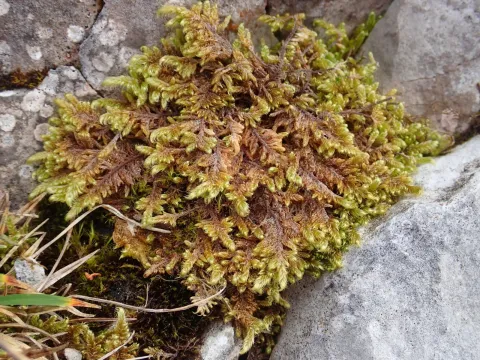
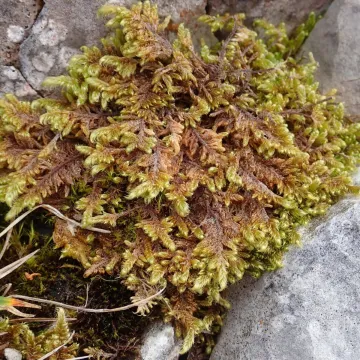
Botanically, the plant is characterized by its feathery, pinnately branched stems. The leaves are typically narrow, sickle-shaped, and sharply pointed, providing a distinct appearance that classifies it within the Ctenidium genus. Its cellular structure is highly efficient at absorbing ambient moisture, allowing it to survive in areas where liquid water availability may be intermittent but atmospheric humidity is high.
Environmental requirements for this species are specific: it demands high atmospheric humidity, shelter from direct solar radiation, and low-temperature stability. Unlike traditional agricultural crops, it does not respond to conventional fertilizers; in fact, excess nutrients can prove toxic to mosses. Its maintenance in controlled environments requires meticulous control of pH levels and air purity, as it is highly sensitive to atmospheric pollution.
Economically, Ctenidium procerrimum is primarily of interest in botanical research and specialized landscaping, such as terrarium design or ecological restoration. It serves as a natural bioindicator of air quality. The species is generally resistant to typical insect pests, although it can be vulnerable to fungal competition or desiccation if environmental conditions shift beyond its narrow survival niche.
Photo gallery