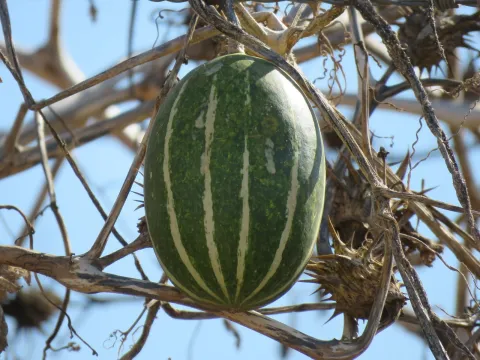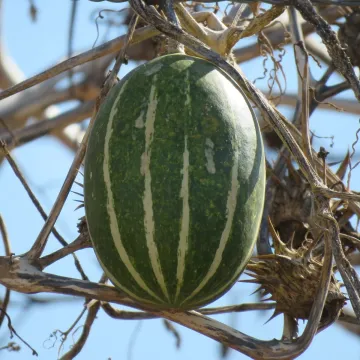
Andre pumpkin
Cucurbita andreana
Description
The Andre pumpkin (lat. Cucurbita andreana) is a wild herbaceous species belonging to the Cucurbitaceae family. Recognized as a progenitor and a close wild relative of the domesticated Cucurbita maxima, this plant has significant importance in evolutionary botany and genetic resource management. It functions as a vigorous climber adapted to wild habitats.
The origin of this species is traced to South America, specifically in regions across Argentina and Uruguay. It is typically found in riparian zones, floodplains, and disturbed natural sites. Unlike modern cultivars that have been selected for sweetness and fruit size, Cucurbita andreana retains wild traits that prioritize survival, reproduction, and chemical defenses against environmental stressors.
Botanically, the plant is characterized by deeply lobed leaves, prickly stems, and small, spherical fruits with hard, lignified rinds. The flesh of the fruit is known for its intense bitterness due to high levels of cucurbitacins. These compounds, while making the fruit unpalatable for humans, serve as a potent evolutionary defense mechanism against herbivores and certain plant pathogens.
In terms of agricultural requirements, the plant thrives in areas with sufficient sunlight and warm temperatures, mirroring the requirements of domesticated squash. While it does not require conventional farming techniques like fertilization or irrigation, its growth patterns in nature show a preference for nutrient-rich, alluvial soils. Its ability to colonize diverse landscapes makes it a robust component of its native ecosystem.
The primary utility of Cucurbita andreana lies in modern agricultural science. Breeders utilize this species as a source of valuable genetic traits to improve domesticated varieties. By integrating its resistance genes, researchers can enhance the resilience of commercial pumpkins against diseases and pests, including aphids, spider mites, and various fungal pathogens. This cross-breeding process helps create more sustainable varieties for global agriculture.
Photo gallery