Finger-leaf gourd
Cucurbita digitata
Description
The finger-leaf gourd (Cucurbita digitata) is a perennial herbaceous plant belonging to the Cucurbitaceae family. Unlike common edible cultivars, this species is a wild plant well-adapted to the harsh conditions of arid environments. Its resilience and unique biological traits make it a subject of interest for agricultural researchers focused on developing drought-tolerant crop varieties.
The species is native to the southwestern United States and northern Mexico. It thrives in desert and semi-desert regions, where water availability is extremely limited. The plant has evolved a deep, extensive root system that allows it to survive prolonged droughts and intense thermal stress, typical of its native landscape.
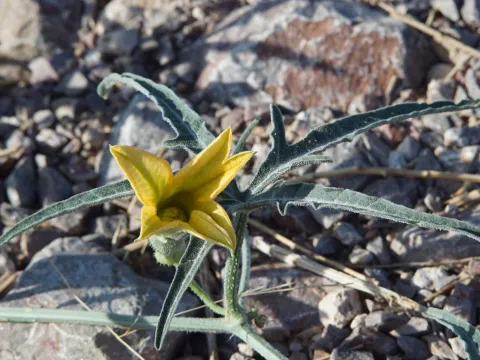
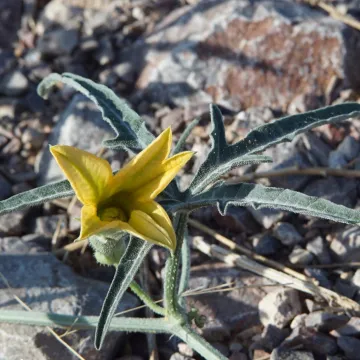
Botanically, the plant is distinguished by its deeply lobed leaves that resemble fingers, giving it its common name. The stems are prostrate and can grow over long distances. The fruits are generally small and often have attractive, mottled color patterns; however, they are considered non-edible for humans due to their high content of bitter compounds, specifically cucurbitacins.
Climatic requirements are strict: the plant requires high solar radiation and well-drained, sandy or gravelly soils. It is highly sensitive to waterlogging, which often leads to root rot diseases. In terms of agronomy, the focus must be on maintaining low moisture levels and providing sufficient space for its sprawling vines, which can cover large surface areas if not controlled.
While not a major commercial crop, the finger-leaf gourd is used in landscape gardening and as a source of genetic material for breeding programs aiming to improve the drought resistance of domestic cucurbits. Common pests and diseases include powdery mildew, aphids, and spider mites, which are common across the entire gourd family and require standard integrated pest management strategies.
- Perennial growth habit
- Exceptional drought resistance
- Deeply lobed foliage
- Non-edible bitter fruits
- Genetic value for breeding research
Photo gallery