Coyote melon
Cucurbita palmata
Description
Coyote melon (Cucurbita palmata) is a perennial herbaceous plant belonging to the Cucurbitaceae family. Often referred to as the palm-leaf gourd, this species is uniquely adapted to desert environments and characterized by its creeping, drought-hardy growth habit.
The native range of this species extends throughout the arid regions of the southwestern United States and northwestern Mexico. It is frequently encountered in sandy, desert-like soils where it acts as an important ground cover that can withstand harsh, extreme temperature fluctuations and minimal precipitation.
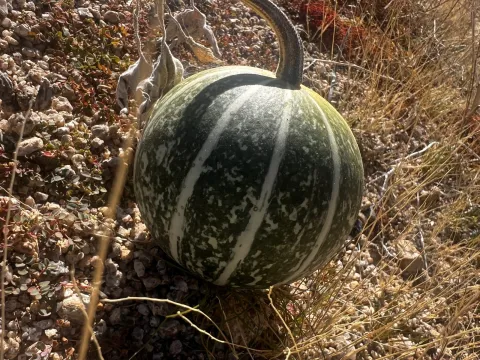
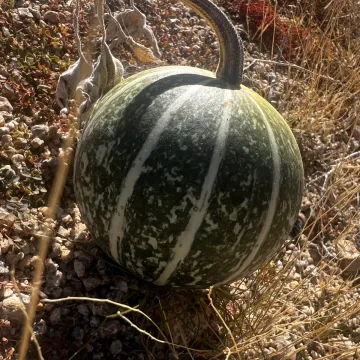
Botanically, the plant is distinguished by its deeply lobed leaves that resemble a human hand, covered in stiff hairs. The small, spherical fruits are distinctively striped with green, yellow, or white patterns, and are strictly non-edible due to the high concentration of toxic cucurbitacins within the pulp.
Cultivation requirements focus on excellent soil drainage and high light intensity. The plant is prone to root rot if soil moisture remains too high, so it is best suited for sandy, rocky, or gravelly soils. In terms of maintenance, it requires almost no supplemental watering once established in its native climatic zone.
Beyond its ecological role in preventing soil erosion, Coyote melon is utilized in xeriscaping—a form of landscaping that requires little to no irrigation. The dried mature gourds are popular in craft and decorative floral displays, highlighting the aesthetic utility of the plant despite its inedible nature.
- Native desert drought tolerance
- Deeply lobed palm-shaped foliage
- Inedible bitter fruits
- Ideal for xeriscaping projects
Photo gallery